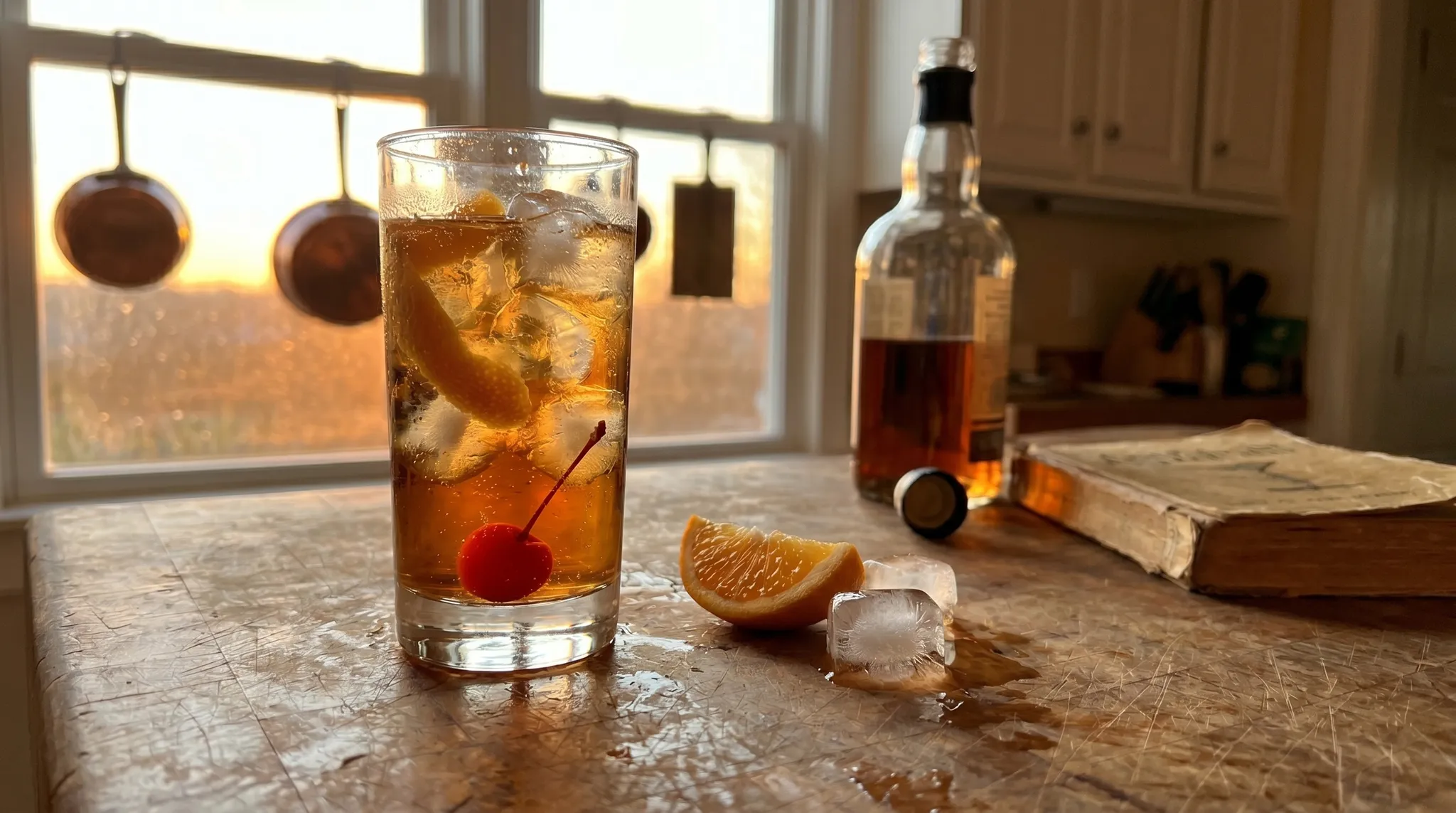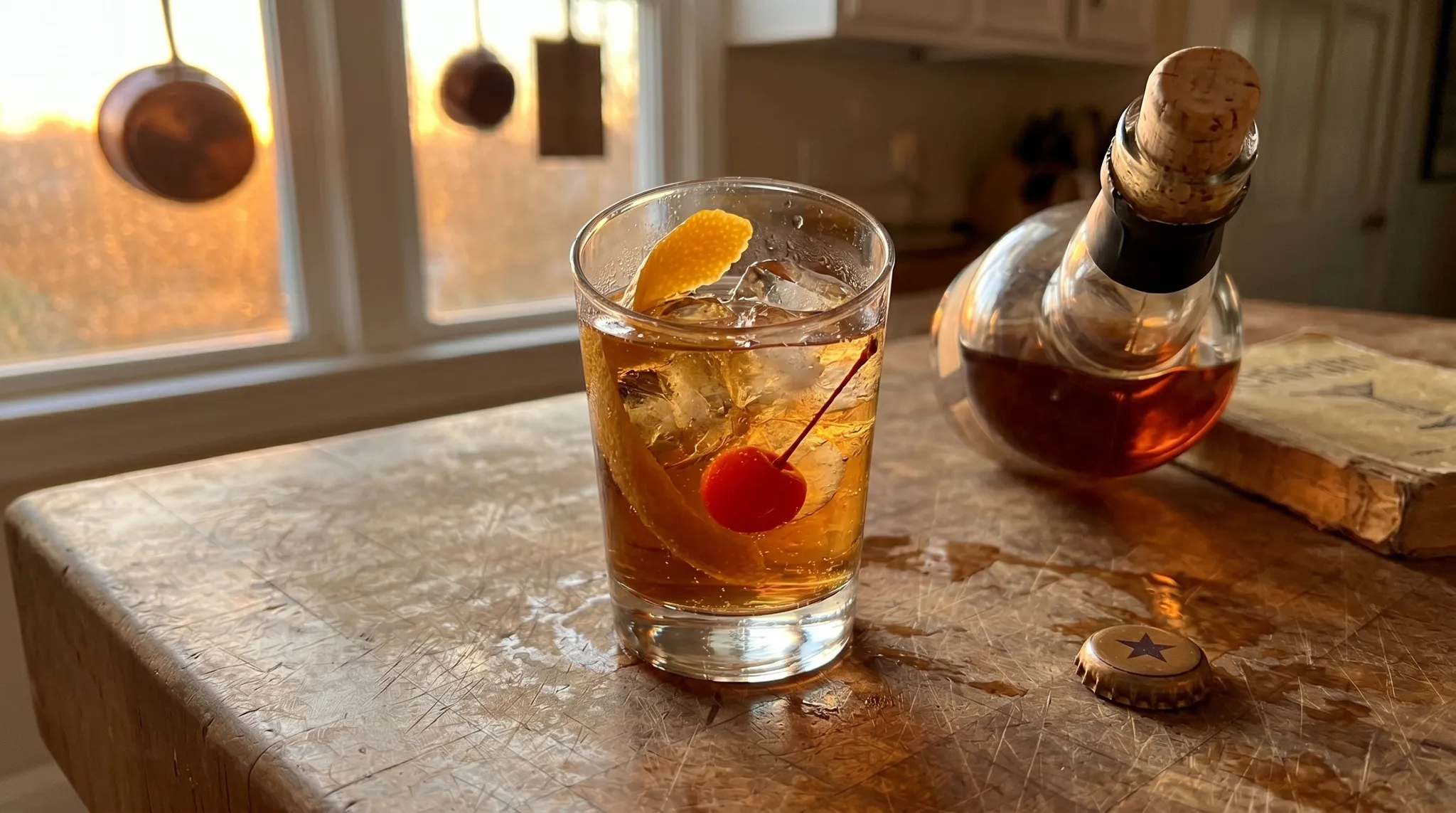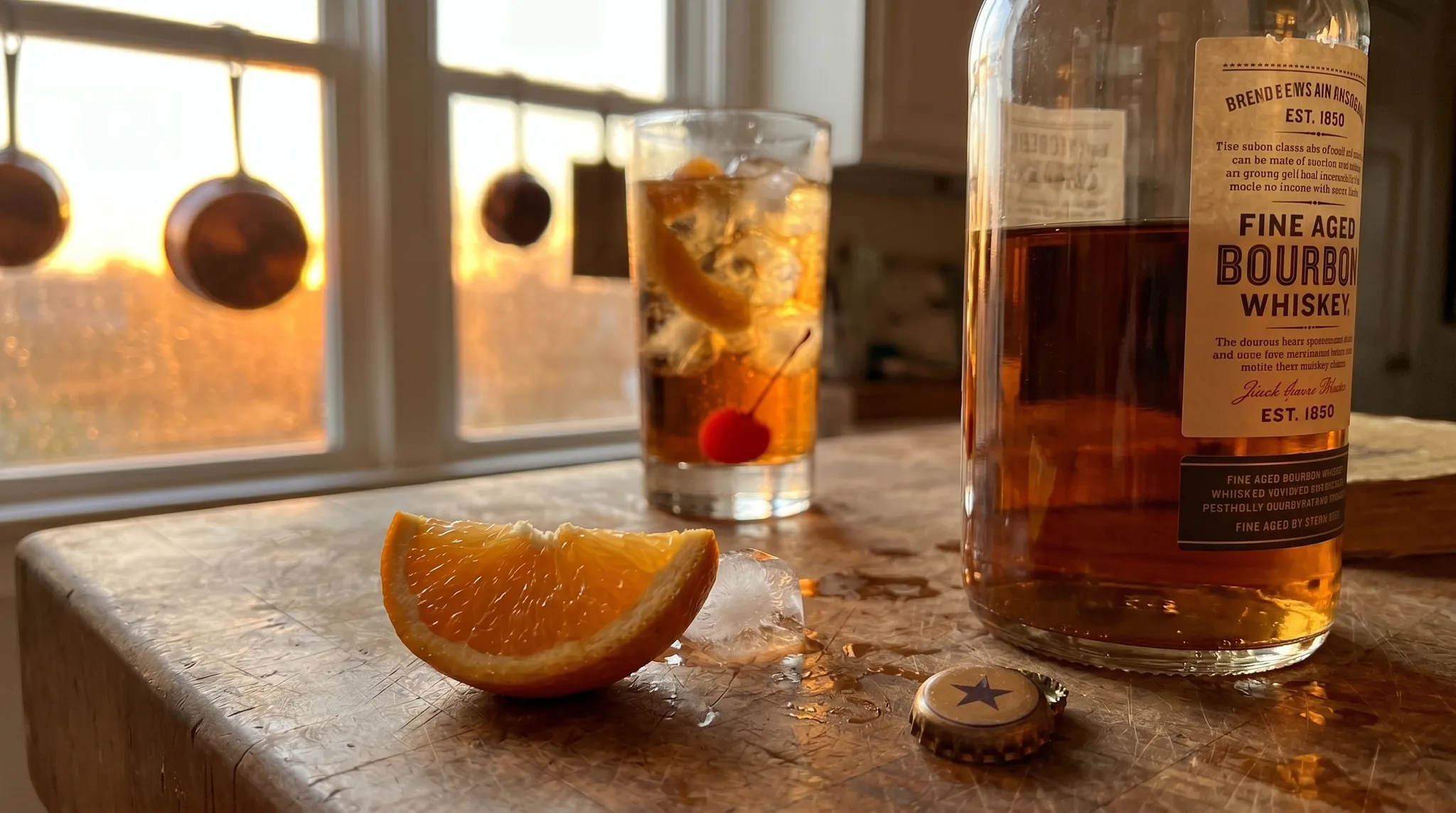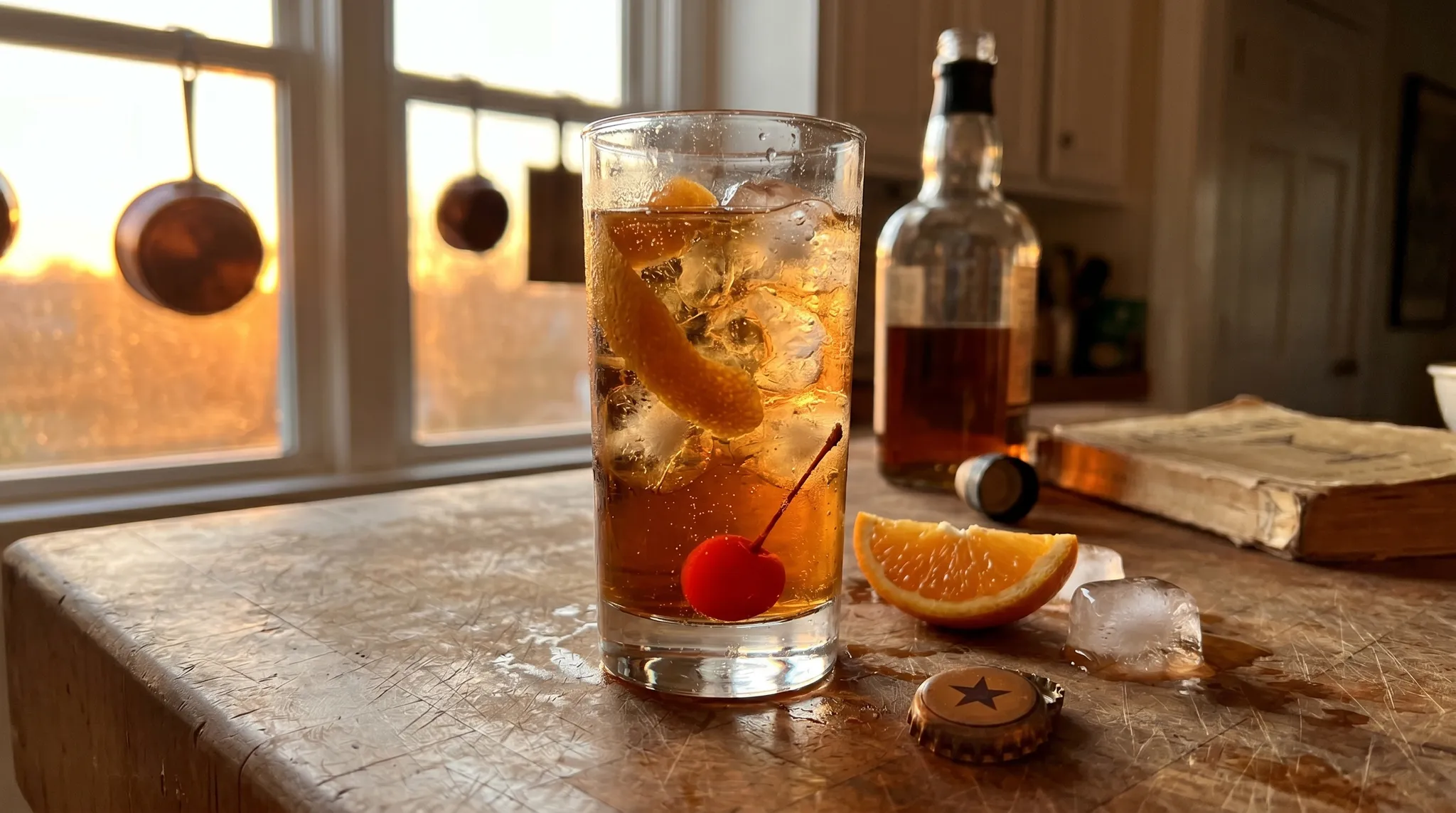
I’m not going to lie. I didn’t expect to cry in a bar in Goodsprings over a root beer. But life keeps finding ways to humble me, and apparently this time it chose a pre-war soft drink and a sunset I can still see when I close my eyes.
I have been sitting on this recipe for two months because I wanted to get it right. Not recipe-blog right — right right. The kind of right where you take a sip and you’re back in the Mojave and the light is golden and your friend is laughing and the jukebox is playing something that sounds like the end of the world trying to be romantic about it.
Let me explain.
The Story
My friend Claudette is the reason I ended up in the Mojave, so I need to tell you about Claudette first. Claudette is a historian. Not the dry kind — the kind who cries at roadside markers and owns three different pairs of “field shoes” and has opinions about which direction a historical photograph was taken from. She specializes in the pre-war American Southwest, which means she knows more about what the Mojave used to be than anyone I’ve ever met, and she’s been trying to get me to visit for years.
“You’d love it,” she’d say, maybe twice a month, the way people say “you’d love it” when they mean “I love it and I need someone to love it with me.”
“It’s a desert, Claudette,” I’d say. “I’m going to sweat.”
“Everyone sweats. The desert doesn’t judge you for sweating.”
She has a way of saying things like that — calm, factual, slightly philosophical — that makes you feel like you’ve been overthinking everything. Which, to be fair, I have. Mark says I could overthink a sandwich. He’s not wrong. Last week I spent twenty minutes deciding whether to put mustard on sourdough and then didn’t eat the sandwich because I’d thought about it too long and it felt “resolved.”
The trip happened because of a cancellation. Claudette had planned a research visit to the Mojave — something about pre-war bottling infrastructure, I didn’t fully track the premise — and her colleague backed out the week before. She called me on a Thursday.
“I have an extra ticket on the caravan shuttle to Goodsprings. It leaves Monday.”
“Claudette, it’s Thursday.”
“I know what day it is.”
“I haven’t packed.”
“You don’t need to pack much. It’s a desert. Bring a hat.”
I brought a hat. I also brought three shirts I didn’t wear, a sweater I cannot explain, and a pair of sandals that were a terrible decision. Mark drove me to the caravan depot and said “have fun” in the exact tone of voice that means “I don’t understand why you’re doing this but I love you.” I kissed him and grabbed my bag and tried not to think about the fact that I was voluntarily going somewhere with a name like “the Mojave Wasteland” while my herb garden at home still needed watering.
The caravan shuttle to Goodsprings takes the better part of a day. I want to be specific about this because people always ask “how was the trip?” and the answer is: long, hot, and the seats are not great. The caravan is a converted brahmin transport — two-headed cattle, for the uninitiated, though at this point if you’re reading my blog and you don’t know what a brahmin is, I have questions about how you got here. They’ve bolted bench seats into the cargo bed and strung a canvas shade overhead that does about forty percent of what you’d want a shade to do. The other sixty percent is sunburn.
Claudette read the entire ride. An actual paper book, because she doesn’t trust anything with a battery in the Wasteland. She had a pencil behind her ear and she underlined things every few pages with the deliberate energy of someone building a case for something. I watched the landscape change — scrub brush and cracked asphalt and the occasional rusted-out car carcass baking in the sun. The Mojave is not pretty the way mountains are pretty or the way oceans are pretty. It’s pretty the way a scar is pretty. Something survived here, and the survival itself is the view.
I was wearing the sandals. I was already regretting the sandals. The dust got between my toes in a way that felt personal.
“You wore sandals,” Claudette observed, not looking up from her book.
“I made a choice.”
“You made a choice,” she agreed, in the same tone a doctor uses when they say “and how long has this been going on.”
Goodsprings appeared in the late afternoon like something the desert had been hiding behind its back. Small. Dusty. A water tower, a general store, a handful of buildings that looked like they’d been standing since before the war and intended to keep standing out of sheer stubbornness. The light was doing something extraordinary — that golden-hour desert light, the kind you see in photographs and assume is edited but isn’t, the kind where every surface turns warm and every shadow stretches long and the whole world looks like it’s being remembered instead of seen.
I stood on the main road — if you can call it a road, it was more of a suggestion — and watched the light hit the water tower and felt something in my chest that I’m going to call peace even though that’s not exactly right. It was the specific feeling of being somewhere that doesn’t need you. Somewhere that was here before you arrived and will be here after you leave and doesn’t care either way. There’s a freedom in that. A permission to just be a person standing on some dirt, wearing bad sandals, watching the light change.
Claudette was already walking toward the Prospector Saloon.
The Prospector Saloon is the kind of bar that doesn’t know it’s iconic. Wood frame, tin roof, a porch with two chairs that have seen more sunsets than I will in my entire life. The sign is hand-painted and slightly crooked and I loved it immediately. Inside, the air was cooler by exactly enough degrees to make you grateful — not air-conditioned, just shaded, the way buildings cool down when their walls are thick and their windows are small and the desert has taught them how to hold onto the morning.
The bar itself was wood. Dark wood, old wood, the kind of wood that has been wiped down ten thousand times and has absorbed a decade’s worth of spills into a patina that no one would choose but everyone agrees is beautiful. It was scarred with glass rings and knife marks and at least one set of initials carved near the far end that I chose not to investigate. The surface had a slight tackiness to it — not dirty, just seasoned. Like a cast iron pan that’s been used right.
I touched the bar top. I don’t know why. Sometimes you need to know what a surface feels like before you can trust the drink that’s going to sit on it.
There were maybe six people inside. A man in the corner playing a card game against himself and, from the look on his face, losing. Two women at a table sharing a bottle of something amber and talking in low voices. A trader asleep in a booth with his hat over his face and a brahmin-hide bag under his feet. The jukebox in the corner was playing something twangy and warm and slightly distorted, the kind of music that sounds like someone loved it first and recorded it second.
The bartender was a woman named Trudy — stocky, sun-weathered, the kind of face that has decided smiling is a resource to be allocated strategically. She watched us come in the way bartenders in small towns watch strangers come in: with interest that hasn’t yet decided if it’s friendly.
“What can I get you,” she said. Not a question. An assessment.
Claudette smiled. Claudette’s smile is her secret weapon — it’s warm and genuine and it makes people want to tell her things. “Two Sunset Sarsaparillas, please.”
Trudy’s expression shifted by about two degrees toward approval. “Coming right up.”
She reached under the bar — not into a fridge, I noticed, but into a metal washtub filled with ice — and pulled out two bottles. The bottles were brown glass with labels that had clearly been designed before the war and not updated since. The sunset on the label was orange and pink and faded, and the cap — the cap was the thing. A metal bottle cap with a star stamped into it. Some of the caps had a blue star. Those were the special ones. Claudette told me later about the star cap legend — collect enough blue stars and you could supposedly claim a treasure from the Sunset Sarsaparilla headquarters. The treasure turned out to be worthless, guarded by robots, a punchline about the American dream that still hasn’t stopped being funny.
Trudy popped both caps with a bottle opener mounted to the bar — the clack of it echoed in the quiet room — and set them in front of us. The bottles were cold. Not fridge-cold. Ice-cold. The kind of cold that comes from sitting in a washtub in a desert bar for the specific purpose of being the best possible version of cold when someone needs it.
I picked up the bottle. Condensation ran down the glass immediately, pooling at the base of my thumb. The liquid inside was amber — darker than I expected, not soda-amber but almost whiskey-amber, with a depth to it that made me tilt the bottle toward the window light to see more. It caught the golden hour coming through the saloon window and for a second the liquid glowed the exact color of the sunset on the label.
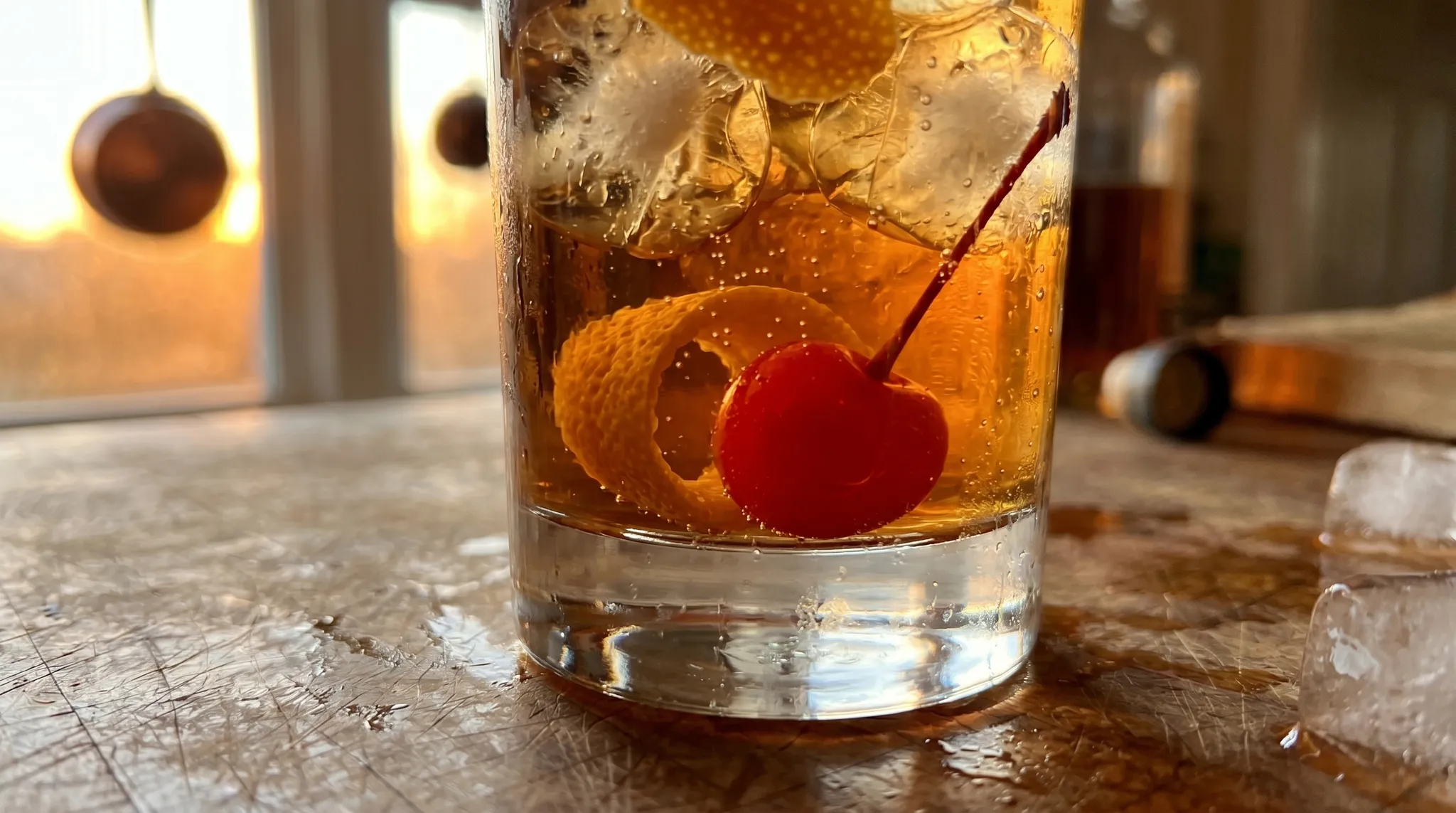
I drank.
Friends. I took one sip and I understood why people in the Wasteland collect these caps like currency. The first thing that hit was the sarsaparilla itself — not root beer, not exactly, but its ancestor. Earthier. Deeper. With a vanilla backbone that unfolded slowly, like someone telling you a secret they’d been saving. Then the sweetness, but not sugar-sweet — honey-sweet, molasses-sweet, the kind of sweetness that tastes like it was grown instead of manufactured. Then the finish, which was where the Mojave lived: a faint bitterness, warm, with something almost smoky underneath, like the drink remembered the desert it came from.
I set the bottle down on the bar. The glass ring it left overlapped a dozen others.
“Oh,” I said.
Claudette was watching me with the expression she gets when she’s shown someone a historical site and they’ve reacted correctly. Patient. Satisfied. A little bit smug.
“I told you,” she said.
“You told me.”
We sat at that bar for two hours. The sun dropped lower and the golden light turned amber and then orange and then a deep, bruised pink. The jukebox kept playing. Trudy refilled our ice and brought us a second round without being asked. At some point the card player in the corner won a hand against himself and said “ha” quietly and went back to dealing. I watched the light move across the bar top, watched the condensation rings multiply, watched Claudette take notes in her little field book about the bottle design and the production stamps.
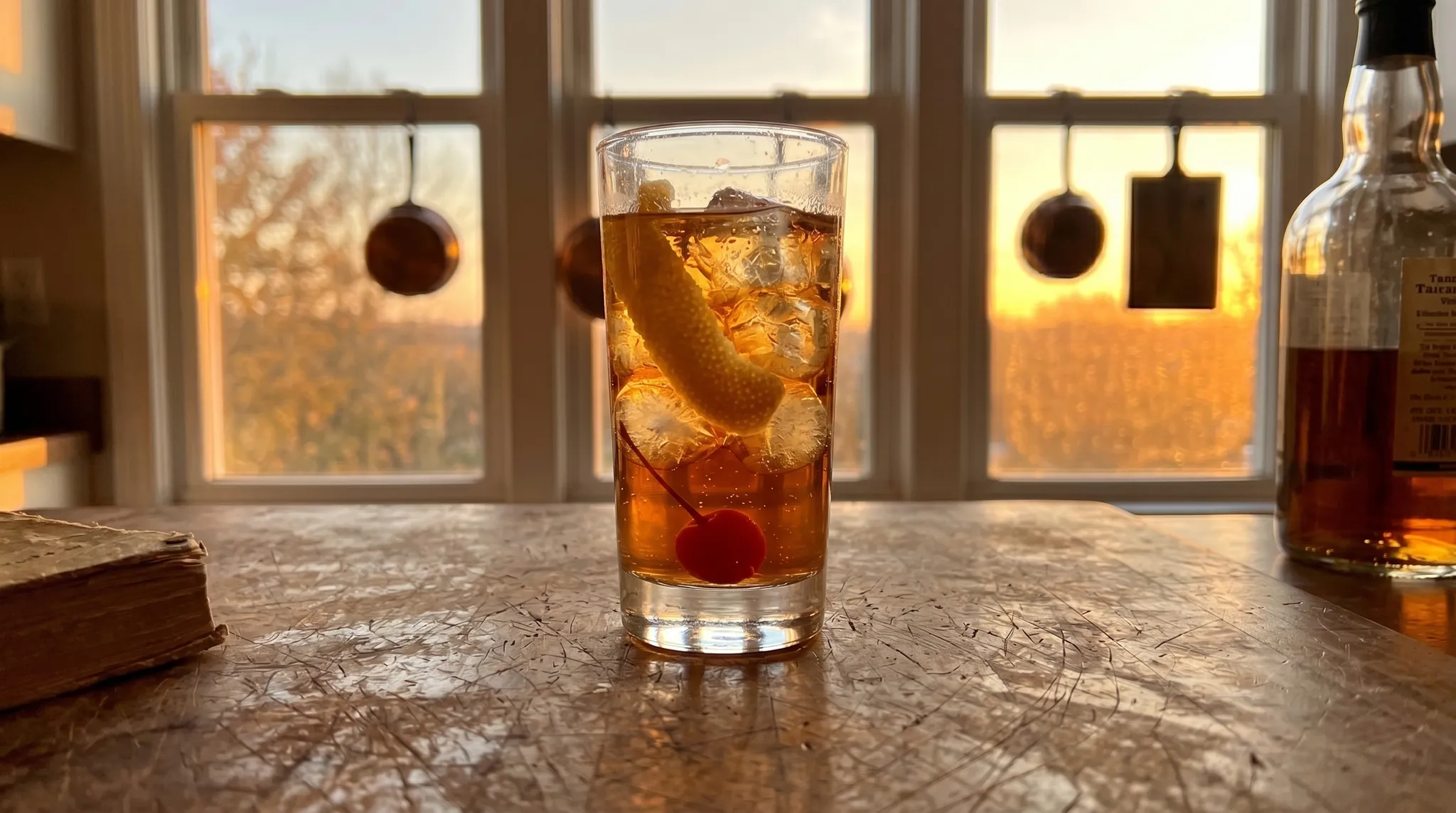
I felt — I want to get this right — I felt like I was exactly where I was supposed to be. Which is a rare feeling and one I don’t trust when it arrives easily. But this one earned it. A long ride through the dust, bad sandals, a hot canvas shade, and then this. The cold bottle. The warm light. The bartender who decided we were okay. The friend who’d been waiting years to share this.
I checked both our caps. Neither was a blue star. Claudette said that was fine. She said the treasure wasn’t the point anyway.
I bought four bottles to bring home. Wrapped them in my sweater — the sweater I couldn’t explain packing, which now had a purpose, which maybe it always had a purpose and I just didn’t know it yet. Mark picked me up at the caravan depot. “How was the desert?” “I need bourbon,” I said, already thinking.
The recipe development took three weeks and I’m going to walk you through the important parts because the distance between “bourbon and root beer” and “a drink that tastes like sunset in Goodsprings” is longer than you think.
The bourbon was first. I started with Maker’s Mark because it’s what I had open. Too sweet. The vanilla in the bourbon competed with the vanilla in the root beer and the whole thing tasted like someone had double-booked the vanilla and both vanillas were annoyed about it. I tried Bulleit next — better, the higher rye content gave it a spiciness that cut through the sweetness, but it was too assertive. The bourbon was showing up to the party and demanding to DJ. What I needed was a bourbon that would collaborate — present, flavorful, but willing to let the sarsaparilla lead. I landed on Buffalo Trace. 45% ABV, corn-forward, with caramel and vanilla notes that complemented the root beer instead of competing with it. It tasted like a handshake. An agreement between two flavors that they were going to work together and neither one needed to win.
The root beer was the revelation and the heartbreak. Here’s the thing about root beer that I didn’t know before this project and now can’t unknow: most commercial root beers are flavored with artificial sassafras because real sassafras contains safrole, which the FDA restricted in the 1960s. This means that most root beers taste like what a committee decided sassafras should taste like rather than what sassafras actually tastes like. For this cocktail, that distinction matters. Sarsaparilla — actual sarsaparilla, the root, the plant — has a deeper, earthier, more complex flavor profile than sassafras. It’s less sweet. More botanical. When I tried mainstream root beers (A&W, Barq’s, Mug), the cocktail tasted like a bourbon float at a county fair. Fun, but not Goodsprings. I needed craft. I tried Sprecher, which uses honey and vanilla and real botanicals — immediately better, warmer, more complex. I tried Maine Root, which is sweetened with cane sugar and has a cleaner finish. Both worked. But the winner was Virgil’s, which uses a blend of anise, licorice, vanilla, cinnamon, clove, wintergreen, sweet birch, and actual sarsaparilla root. One sip and I was sitting at Trudy’s bar again. It was the earthiness. The depth. The feeling of something that was made instead of assembled.
The bitters were the fine-tuning. Angostura was my first instinct and it was correct — the warm spice and gentle bitterness echoed that smoky finish I remembered from the original. Two dashes. Not one, not three. I tried Fee Brothers Aztec Chocolate bitters on a whim — fascinating, added a mole-like complexity, but it pulled the drink toward dessert when it needed to stay in the saloon. I tried orange bitters and the drink brightened in a way that felt wrong, like someone had turned on fluorescent lights in a room that was better by candlelight. Angostura. Two dashes. Sometimes the first instinct is right.
The fresh orange juice was my addition, and it almost didn’t survive testing. Half an ounce — that’s all. Just enough to warm the color from root-beer-brown to something approaching amber-gold, approaching sunset. Without it the drink looks like a bourbon and root beer, which it technically is but aesthetically shouldn’t admit to. With it there’s a warmth to the color, a glow, that catches the light the way Trudy’s bottles caught the light through the saloon window. The orange also bridges the bourbon and the bitters in a way I didn’t expect — the citrus oil in the juice picks up the citrus in the Angostura and creates a connective tissue between the two ingredients that makes the whole drink taste more unified. More inevitable. Like the flavors were always supposed to find each other.
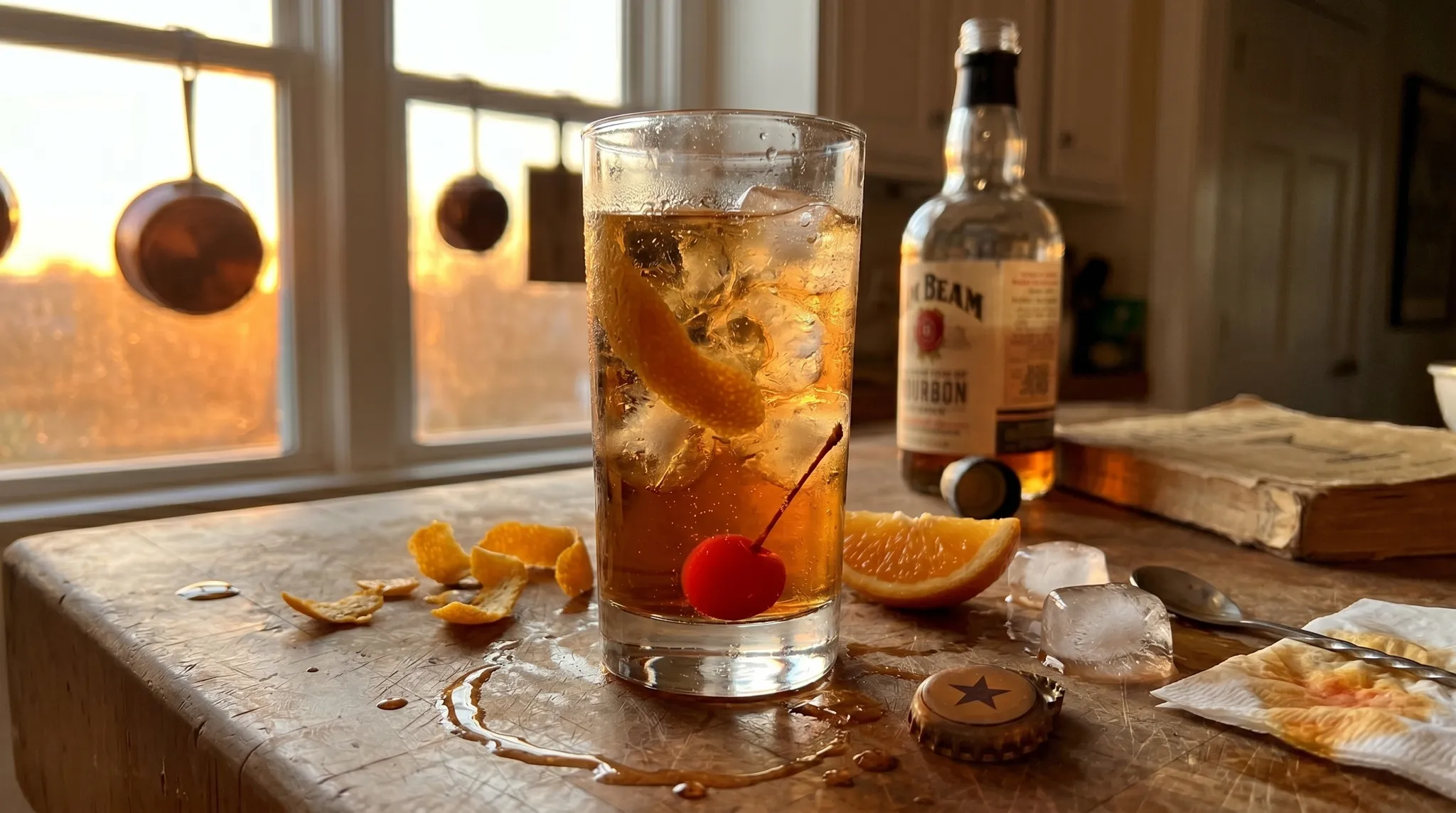
Make this for a long afternoon. Make this for the golden hour, if you can time it — pour the drink, take it outside, and watch the light do what the light does. Make this for someone who understands that the treasure was never the point. Make this for the friend who waited years to take you somewhere and was right about it.
Save the cap. Not because of the treasure. Because you’ll want to remember.
The Mojave Sunset (Sunset Sarsaparilla)
Ingredients
Instructions
- Fill a highball glass with ice. Good ice. The desert is hot and your drink deserves better than those half-moon crescents from the freezer door.
- Pour the bourbon and orange juice over the ice. Watch them meet. They're going to get along.
- Add the Angostura — two dashes, directly onto the ice so it disperses through the drink.
- Top with root beer, pouring slowly down the inside of the glass to keep the carbonation alive. Rushing this is how you get a flat drink and a sticky counter. Ask me how I know.
- Drop a maraschino cherry to the bottom. Watch it sink. That's your star cap. You'll earn it.
- Express the orange peel over the surface — twist it skin-side down so the oils spray across the drink — and drop it in.
- Drink while watching the sunset, or at least facing a window. Contemplation of your choices is optional but encouraged.
Magnolia’s Notes
- On the bourbon: Buffalo Trace is my pick — it’s corn-forward, caramel-smooth, and plays well with root beer instead of fighting it for attention. Evan Williams Single Barrel is a solid budget alternative. Maker’s Mark is too sweet, Bulleit is too bossy. You want a bourbon that shows up to the party and asks what it can bring, not one that rearranges your furniture.
- On the root beer: This is the hill I will die on. Craft root beer with real botanicals — sarsaparilla root, anise, vanilla, wintergreen — is a fundamentally different ingredient than mass-market root beer. Virgil’s is my top choice. Sprecher (honey-sweetened, from Milwaukee, genuinely lovely) is second. Maine Root if you want something cleaner. If you use A&W, the drink will taste fine and I will be sad. The bourbon deserves a dance partner, not a backing track.
- On the bitters: Two dashes of Angostura. Exactly two. One and you can’t taste it. Three and the drink starts to taste like it’s trying too hard. The bitters are doing the same job as the spice rack in a good chili — you shouldn’t be able to identify them, but you’d miss them if they were gone. I tested Aztec chocolate bitters and they were interesting but wrong. I tested orange bitters and they were bright but wrong. Sometimes the obvious choice is the right choice and that’s okay.
- On the orange juice: Fresh-squeezed, please. Half an ounce. It warms the color and bridges the bourbon to the bitters and if you skip it the drink will still taste good but it won’t look like a sunset and then what are we even doing here. The citrus oil in fresh OJ does something that bottled juice doesn’t — it lifts the aromatics the same way a lemon twist lifts a martini. Chemistry. I don’t make the rules.
- On the cherry: Luxardo. Or at least a decent cocktail cherry with actual cherry flavor. Those neon red maraschinos from the grocery store taste like a crayon that’s been soaking in corn syrup. Your star cap should be worth fishing out.
Did you make this? Show me. Bonus points if you watched the sunset while you drank it. Extra bonus points if you saved the cap. No, there’s no treasure. The treasure was the drink. And the friend. And the light.