Friends, I need to tell you about the time my twelve-year-old nephew made me cry on a tropical island and I ended up reverse-engineering a glowing blue factory beverage in my kitchen at three in the morning on a Wednesday.
I have been sitting on this recipe for six weeks because every time I sit down to write it, I start thinking about the look on Brayden’s face when we walked into that factory and I have to get up and do something else for a while. Not because it was bad. Because it was the first time I’d seen him impressed by me since he was eight and I let him stay up past midnight.
Let me explain.
The Story
My nephew Brayden is twelve. He is the kind of twelve that makes you realize twelve-year-olds are not children — they are tiny, terrifying consultants who have decided your entire personality is a performance issue. He plays competitively. I don’t mean he plays a lot. I mean he has a ranking. He has a stream. He has opinions about input latency and once told me, with complete sincerity, that my TV’s refresh rate was “genuinely sad.”
The summer of 2018 was when Brayden started trying to teach me to play. “Teach” is generous. What he did was eliminate me fourteen consecutive times in a row while calling it “a teaching moment.” He’d appear behind me while I was hiding in a bush — I was always hiding in a bush, that was my whole strategy — and he’d do some kind of elaborate emote dance over my digital corpse while I sat on his mother’s couch holding the controller like it had personally offended me.
But the fourteenth time — the one I remember — he didn’t eliminate me. He found me in my bush, health ticking away, and he dropped a glowing blue bottle at my feet.
“Drink it, Auntie,” he said, with the specific condescension only a twelve-year-old can muster. The condescension of someone who has completely mapped the power dynamic and is choosing to be merciful.
I drank it. My health climbed. My shield shimmered back into existence. And something about that — the blue, the shimmer, the fact that my nephew had decided I was worth saving instead of worth eliminating — sat in me for years afterward.
Anyway. Fast forward to last month, when Brayden’s mother called and asked if I’d take him for a long weekend because she needed to “be a person for seventy-two hours.” I said yes immediately. Mark said “where are you going to take him?” and I said “I’ll figure it out” and Mark said “you don’t have a plan, do you” and I said “I have a direction” and he said “that’s not the same thing” and he was right but I’d already committed.
The direction was the Island.
I’d been hearing about the Slurp factory for years — mostly from Priya, who went last spring and came back talking about the production floor like she’d witnessed a religious experience. “The vats are open,” she kept saying. “You can just look in. The blue, Magnolia. The blue.” Priya is a structural engineer and when she starts talking about industrial processes with that particular gleam in her eye you know it’s either going to be the best trip of your life or an insurance claim. It was Priya who told me the factory ran tours, that you could taste the batches, that the whole place smelled like coconut and electricity.
So I booked two tickets for the Battle Bus shuttle to the Island, packed a bag — overpacked, obviously, I brought three jackets for a tropical island because Mark wasn’t there to tell me to stop — and told Brayden we were going on a trip.
“Where?” he asked, not looking up from his phone.
“The Slurp factory.”
He looked up from his phone.
The Battle Bus is, and I cannot stress this enough, a bus. I don’t know what I was expecting — a helicopter, maybe, or some sleek tactical transport. It’s a blue school bus. With a hot air balloon attached to it. The seats are vinyl and the air conditioning works about sixty percent of the time and there was a guy three rows up who was eating a banana with a fork, which I have been thinking about ever since.
Brayden pressed his face to the window the entire ride in. Not in the wide-eyed little-kid way — in the focused, analytical way, like he was cataloguing strategic positions on the landscape below. “That’s Tilted,” he murmured. “They rebuilt it. Again.” He narrated the geography the way I narrate cheese boards: with genuine authority and more passion than the situation required.
The Island hit me before I saw it. The air changed — that sealed, recycled shuttle air gave way to something warm and humid and faintly sweet, like walking into a greenhouse that someone had misted with coconut water. The landing zone was a flat stretch of grass near the coast, and when we stepped off the bus, the heat wrapped around me like a towel fresh from the dryer. I was wearing closed-toe shoes. I was immediately regretting the closed-toe shoes. I was going to be regretting the closed-toe shoes for the entire trip. I want that on the record.
The factory sits at the edge of a lagoon, which sounds picturesque and is, in fact, aggressively picturesque. The kind of picturesque that makes you feel underdressed even though you’re outdoors. The building itself is enormous — corrugated metal walls painted in that specific Slurp blue, venting steam from a dozen pipes along the roofline. It hums. You can feel it in your feet before you can hear it in your ears, this low industrial vibration that says something in here is always being made.
Brayden walked ahead of me. He walks ahead of me everywhere now. At some point between eight and twelve he decided that being seen walking with his aunt was a vulnerability, so he maintains a steady fifteen-foot lead at all times. I’ve made my peace with it. I follow the back of his head through crowds the way I used to follow him through grocery stores when he was four and kept trying to escape the cart.
The tour guide was a woman named Sloane — tall, safety goggles pushed up on her forehead, the kind of person who clearly loved her job and had given this tour four hundred times and was still not tired of the part where people saw the vats for the first time.
“Welcome to Slurp Co.,” she said. “Couple ground rules. Don’t touch the vats. Don’t lean over the vats. And absolutely do not put your hand in the vats. I know that sounds obvious but you’d be surprised.”
“Has someone put their hand in the vats?” I asked.
“I’m not going to answer that,” she said, which was an answer.
The production floor is a cathedral. I don’t use that word casually. The ceiling is five stories of steel and glass, and the vats — Priya was right about the vats — are enormous open cylinders, each one maybe ten feet across, filled to the brim with Slurp Juice in various stages of completion. The first vat was pale blue, almost milky, with a slow mechanical arm stirring it in wide, patient circles. The second was darker, richer, the blue of a swimming pool at dusk. The third — the final stage — was the blue. The blue I remembered from Brayden’s screen. Electric. Luminous. The kind of blue that makes you forget other blues exist.
I stood at the railing and stared. I’m not embarrassed about this. I stared at a vat of blue liquid for probably two full minutes while Sloane talked about mineral content and viscosity ratios and the proprietary oxygenation process that creates the effervescence. Brayden stood next to me — not fifteen feet ahead, next to me — and I could feel him vibrating. Not bouncing. Twelve-year-olds don’t bounce. He was vibrating with the specific frequency of someone trying very hard to be cool about something they are not cool about.
“It’s okay to be excited,” I whispered.
“I’m not excited,” he said. “I’m observing.”
He was so excited.
The smell on the production floor — I keep coming back to this — was coconut and something I can only describe as ozone. Like the air right before a thunderstorm, but sweet. It coated the inside of your nose and stayed there. Three days later, back home, I opened my suitcase and that smell floated out and I was immediately standing at the railing again, watching that mechanical arm stir slow circles through impossible blue.
The tasting room was at the end of the tour. A long counter, steel and glass, with a row of small cups already poured. Each one held maybe two ounces of fresh Slurp Juice — straight off the production line, Sloane told us, less than an hour old.
I need to be honest. I was nervous. I’d built this drink up in my head for years — the shimmer, the color, the idea of it — and I was afraid the real thing would taste like blue raspberry Kool-Aid and I’d have to pretend it didn’t.
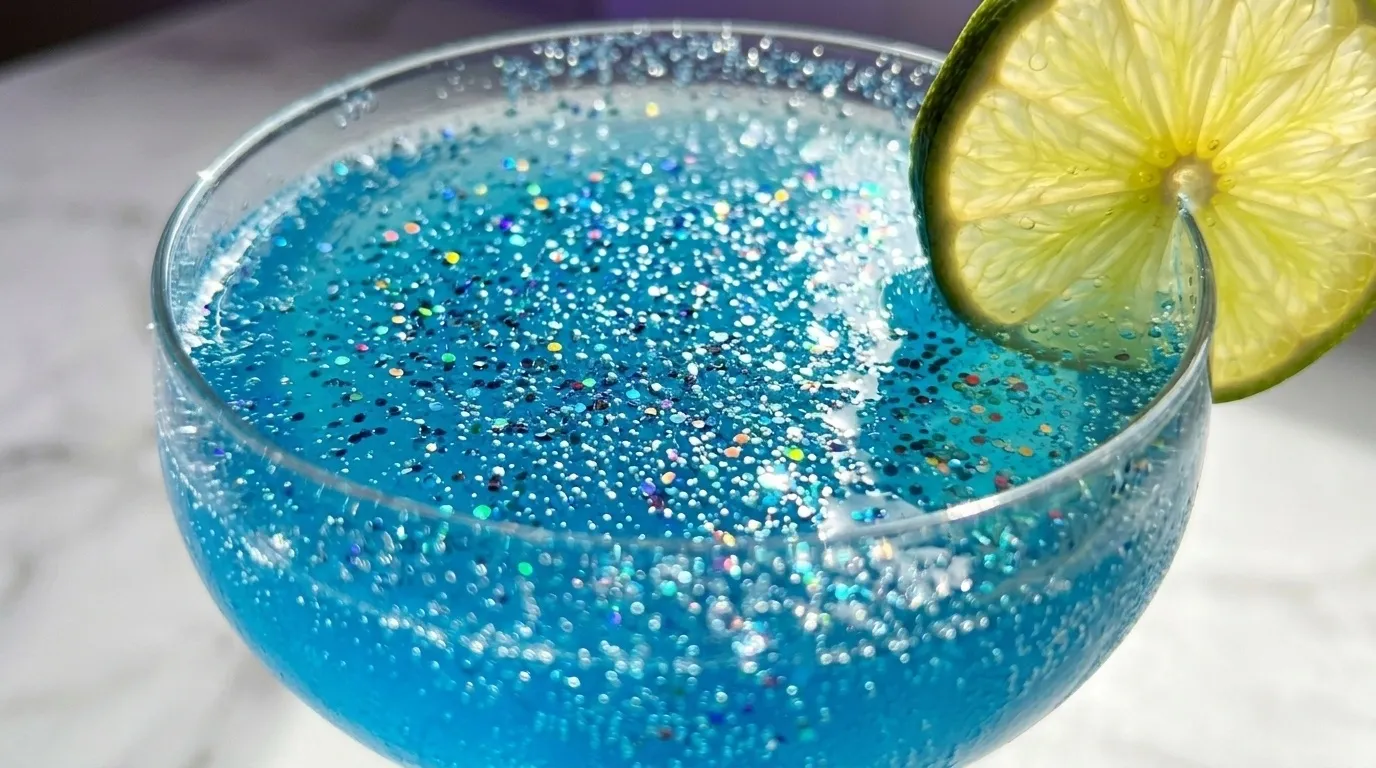
The cup was cold. Not refrigerator-cold. Factory-cold. A cold that came from industrial process, from precision, from temperature-controlled vats and stainless steel pipes. The liquid inside was that third-vat blue, electric and alive, and when I tilted it toward the light, it shimmered. Not sparkled. Not glittered. Shimmered — the way heat shimmers off asphalt, a movement that lived inside the liquid itself. I tilted the cup back. I tilted it forward. The shimmer followed the motion with a half-second delay, like the light needed a moment to catch up.
I drank it.
You guys. You guys.
It was cold first. Then coconut — real coconut, not the synthetic sunscreen kind, but the flesh-of-a-coconut, cracked-open-on-a-beach kind. Then a brightness, citrus, not quite lime and not quite lemon but something in between that doesn’t have a name in my kitchen. And then the back end — this effervescent tingle that spread across my tongue and up into my sinuses and I swear I could feel it in my teeth. Not carbonation exactly. Something more molecular than that. Something that felt, absurdly, like my HP was climbing.
Brayden drank his in one gulp. He set the cup down. He looked at me.
“It’s good, right?” he said. Not condescending. Not analytical. Just a kid, asking his aunt if she liked the thing he liked.
“Brayden,” I said, “it’s the best thing I’ve ever put in my mouth.”
“Better than Mark’s brisket?”
“Don’t tell Mark.”
He grinned. Full twelve-year-old grin, the kind that still has a little kid hiding inside it. I took a picture of him grinning in front of the vats and it’s on my fridge now and I am looking at it as I type this and I need to move on before I start crying again.
Getting this recipe right nearly killed me. Not literally. But close.
The problem with Slurp Juice is that it tastes like it was made by a factory that has access to ingredients I cannot buy at Whole Foods. The coconut is coconut but it’s better coconut. The citrus is citrus but it’s citrus from a dimension where citrus went to graduate school. You can’t just pour Malibu into a glass with some Sprite and blue food coloring and call it Slurp Juice. I mean, you can. People do. Those people are wrong.
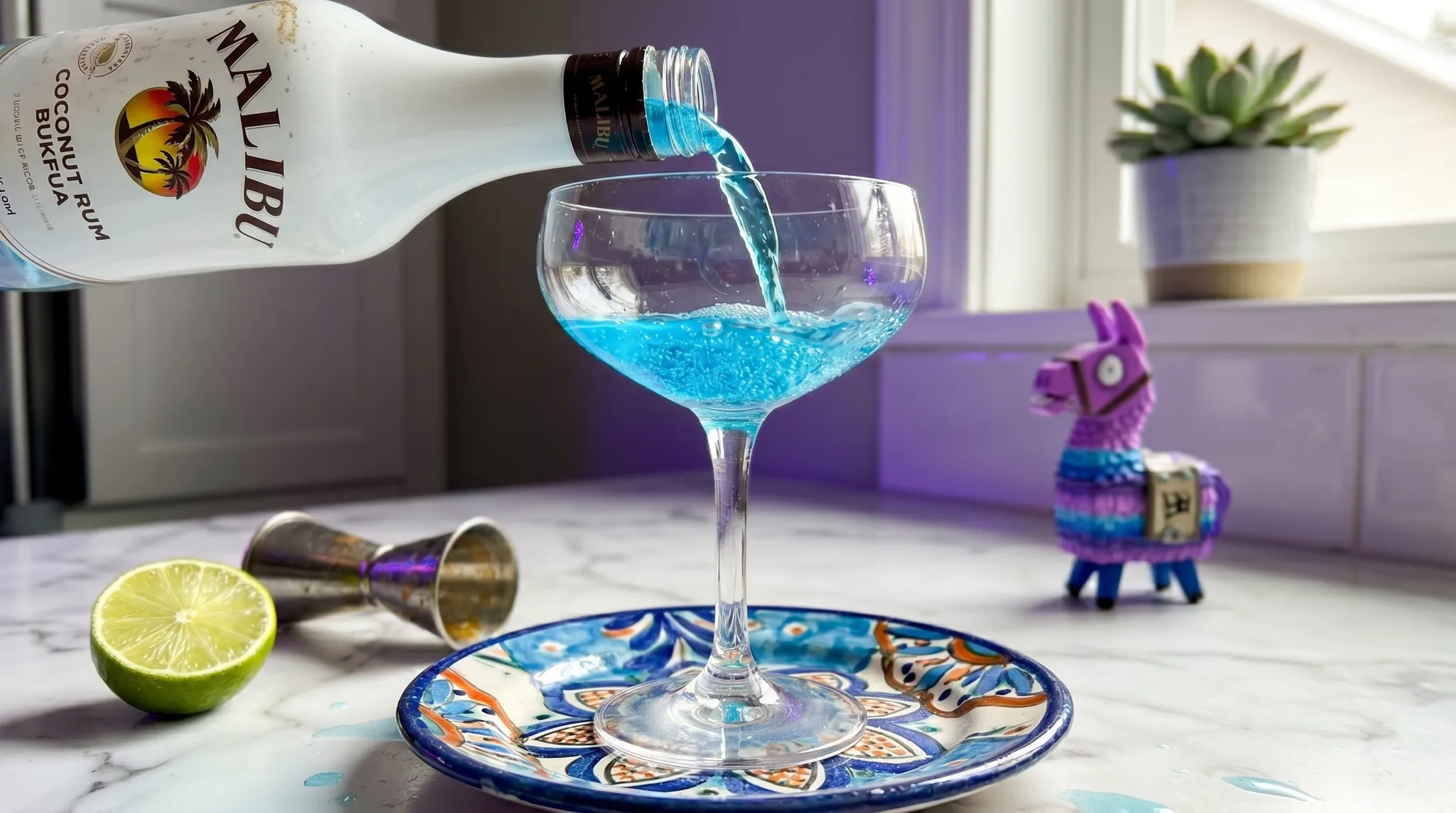
The coconut rum was the foundation and the first thing I got wrong. Batch one was Malibu. Malibu is fine for a lot of things — it’s fine in a pina colada, it’s fine at a pool party, it’s fine if you’re twenty-two and don’t know better. But Malibu at 21% ABV is basically coconut-flavored water with a memory of alcohol, and Slurp Juice is supposed to restore you, not gently suggest that restoration might be available at a later date. I needed something with backbone. I tried Koloa coconut rum out of Kauai — 40% ABV, made with real coconut, actual depth of flavor. The difference was immediate. Where Malibu tasted like a scented candle, Koloa tasted like a coconut that had opinions.
The blue curaçao situation took me down a rabbit hole I’m still not entirely out of. Here’s the thing about blue curaçao that nobody tells you: it’s not all the same blue. Senior Curaçao of Curaçao — the original, from the actual island — produces a deeper, slightly more indigo blue. Bols is brighter, more electric, more Slurp. DeKuyper is the one you find at most liquor stores and it’s fine but it trends toward turquoise in a way that bothered me. I tested all three side by side in identical glasses under identical lighting and made Mark look at them and tell me which one was “the most aggressive blue” and he said “I don’t know what that means” and I said “pick one” and he picked the Bols and he was right.
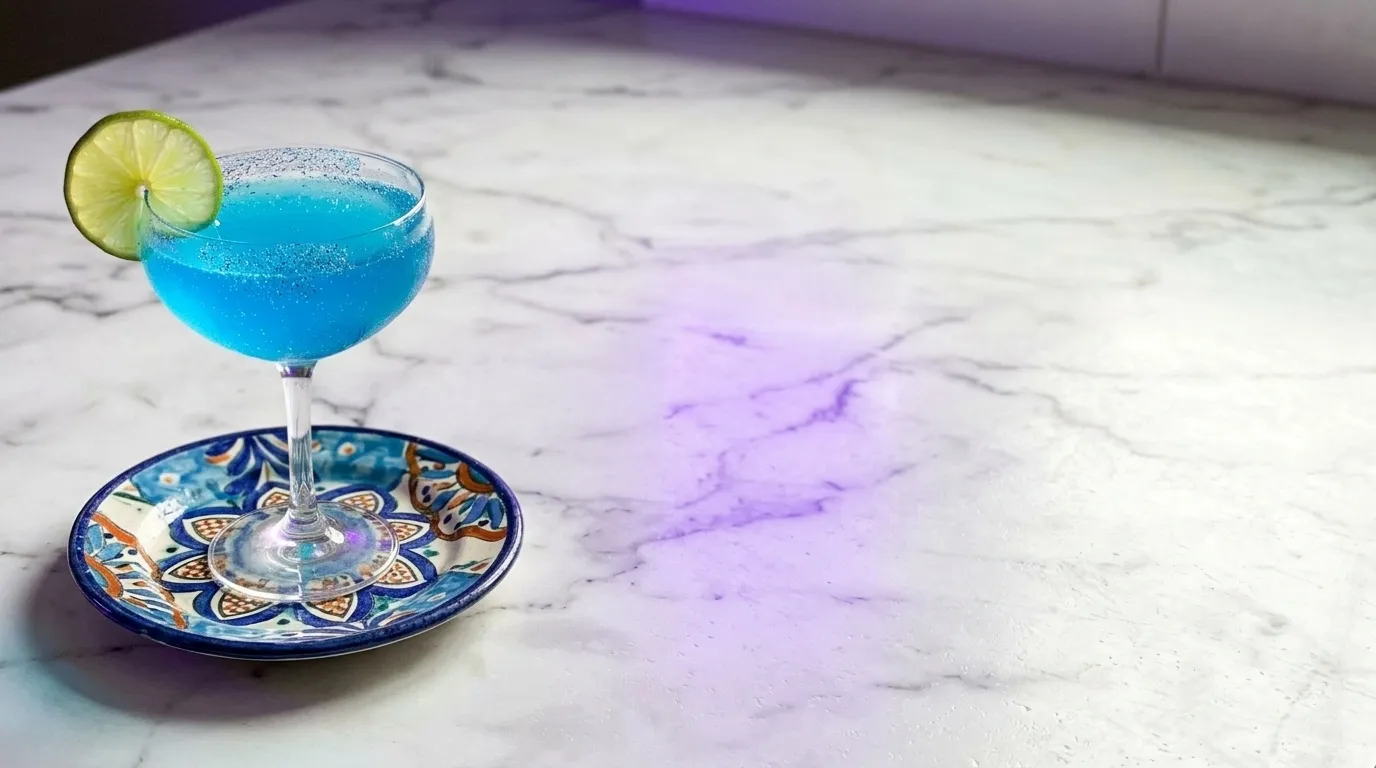
But the real breakthrough — the thing that turned this from “pretty good blue cocktail” into something that actually reminded me of standing at that railing — was the edible glitter. Not as a garnish. As an ingredient. Let me explain, because I know how that sounds. Edible luster dust — specifically blue luster dust, the kind you find at cake decorating supply stores or online from Bakell or Brew Glitter — is made from FDA-approved mica particles that are completely flavorless but catch light the way the surface of that third vat caught the factory lights. When you add it to a liquid, it doesn’t dissolve. It suspends. And when you stir the liquid, or tilt the glass, or breathe on it too hard, the particles move through the drink in slow, shimmering waves. That half-second delay I noticed in the tasting room — the shimmer following the motion — the luster dust replicates it almost exactly. I added a quarter teaspoon to batch six, stirred, held the glass up to the kitchen window, and sat down on the floor.
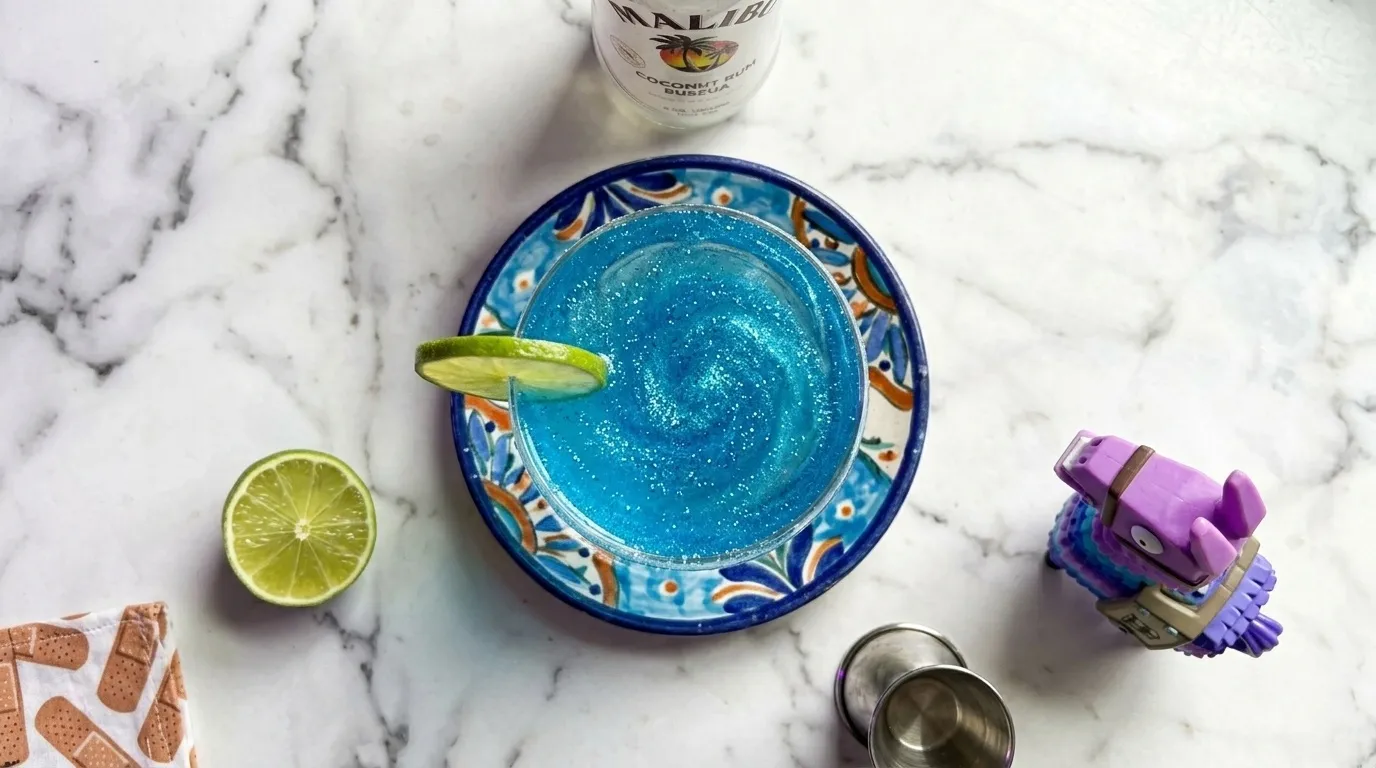
The lemon-lime soda was the last piece and the one I almost got lazy about. I tried Sprite first because Sprite is what you grab. It was fine. It was effervescent. It was also a little too sweet and a little too citric-acid-forward and it muted the coconut. I switched to Fever-Tree sparkling lime and the whole drink snapped into focus — drier, crisper, the bubbles tighter and more persistent. The difference between Sprite and Fever-Tree in this cocktail is the difference between a photograph and the thing you were photographing. Both are the image. One is the memory.
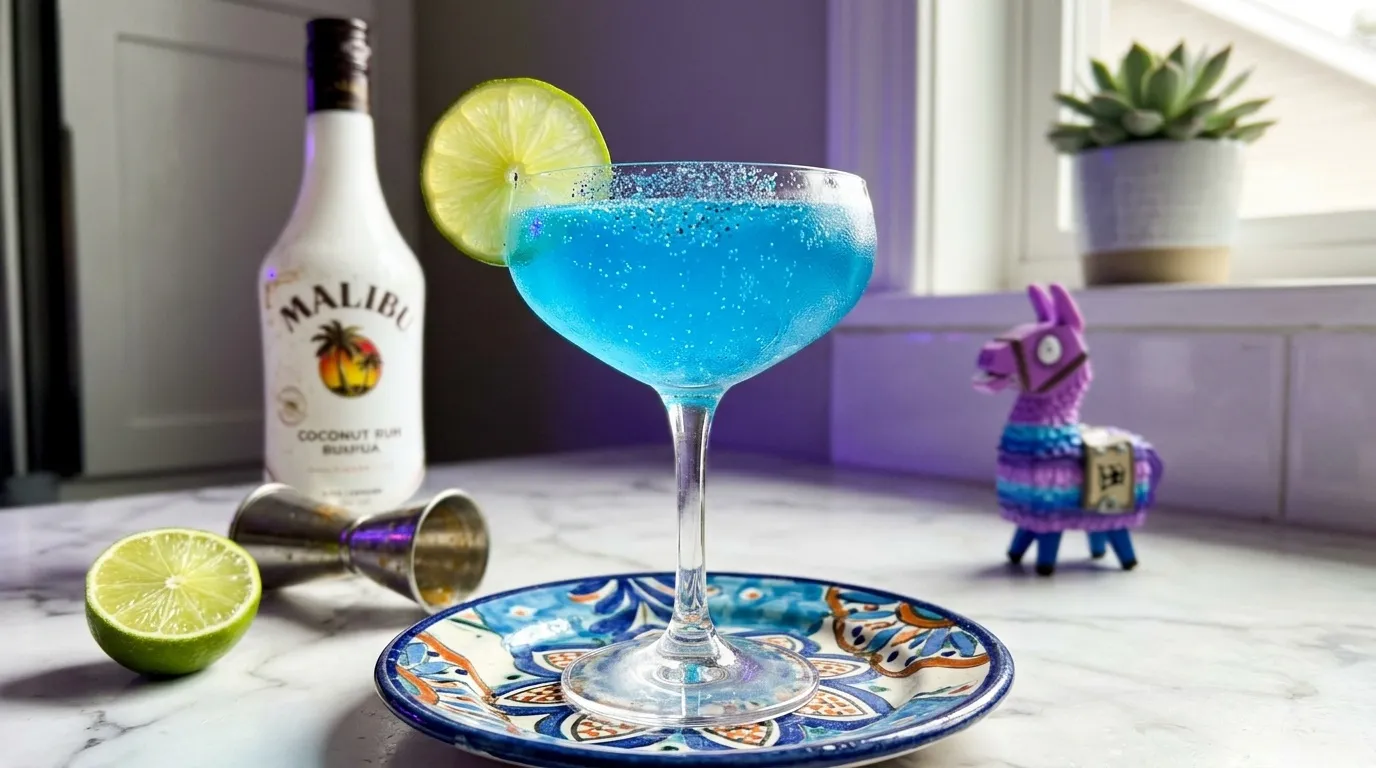
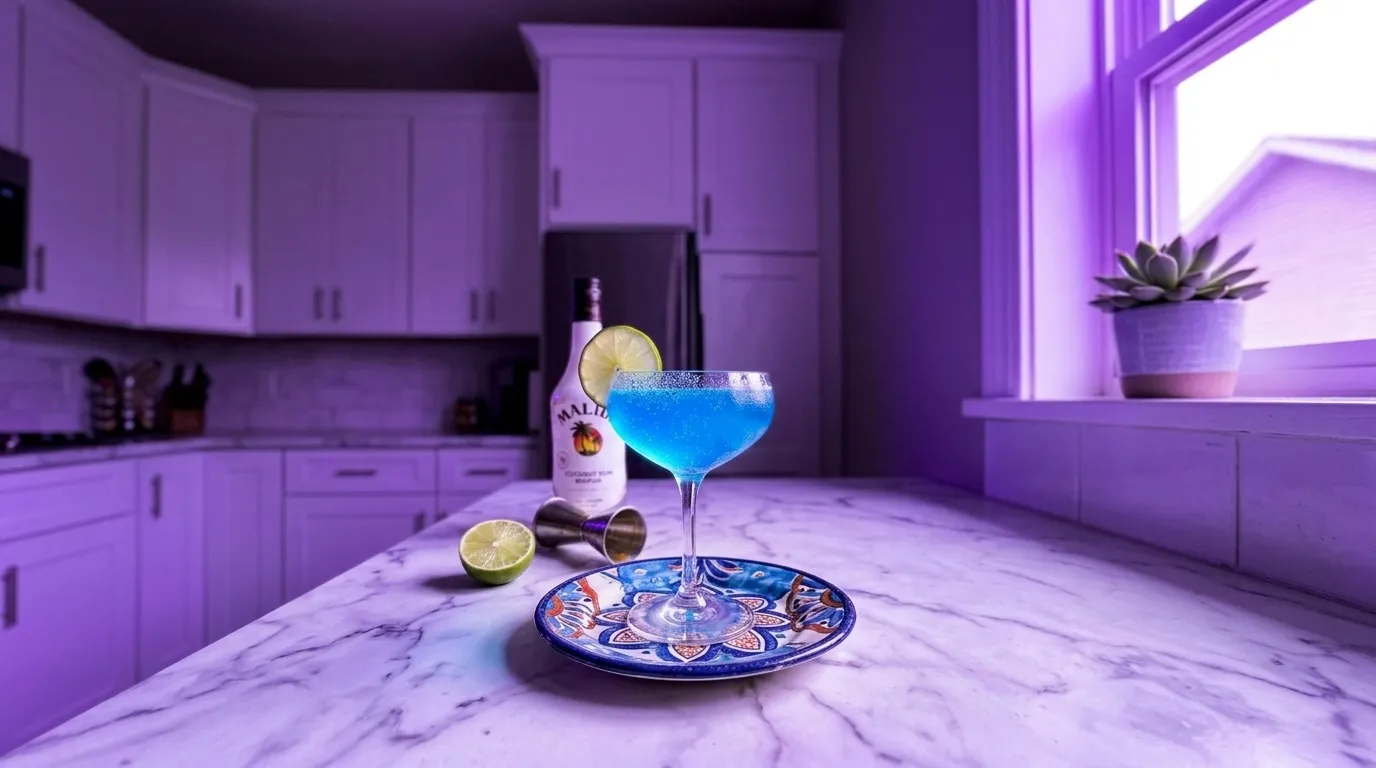
Batch eight was the one. I poured it into a coupe glass — the coupe matters, I’ll explain in the notes — sprinkled the luster dust, and watched the shimmer settle through the blue like something digital becoming analog. I took a sip. Coconut. Citrus. That effervescent tingle. I took another sip and I was in the tasting room again, Brayden grinning, the factory humming in my feet.
I called him that night. “Auntie made the thing,” I said.
“Send me a video,” he said.
I sent him a video of me tilting the glass so the shimmer moved. He sent back a single emoji — the blue heart — and I understood that in twelve-year-old this was the highest possible compliment.
Make this for a hot day. Make this for a night when the damage has been done and you need something that feels like restoration. Make this for the kid in your life who taught you something by accident and will deny it if you bring it up. Make it for yourself, in a coupe glass, with the luster dust, and tilt it toward the light and watch the shimmer and remember that some things from screens are worth making real.
Don’t skip the glitter. I mean it.
The Shimmering Shield (Slurp Juice)
Ingredients
Instructions
- Add coconut rum and blue curaçao to a shaker with ice. Think tropical thoughts. Think about your shield regenerating.
- Shake until cold — about 15 seconds, or the time it takes a twelve-year-old to eliminate you from a bush.
- Strain into a chilled coupe glass. Coupe. Not a highball. The wide mouth lets you see the shimmer.
- Squeeze in the fresh lime juice and stir once, gently.
- Top with lemon-lime soda — pour slowly down the side to keep the fizz alive.
- Sprinkle the edible luster dust over the surface. Do not stir yet.
- Watch the shimmer settle through the drink like shield points regenerating. This is the moment. Let it happen.
- Garnish with a lime wheel on the rim and drink while hiding in a bush, metaphorically or literally.
Magnolia’s Notes
- On the rum: Koloa Kauai Coconut Rum is my first choice — it’s distilled with real coconut and has enough backbone (40% ABV) to make this a cocktail and not a smoothie. Real McCoy 3 Year with a splash of coconut cream also works beautifully. What doesn’t work is Malibu. I know Malibu is easy. I know Malibu is everywhere. Malibu is coconut-scented training wheels and you are better than that.
- On the blue: Bols blue curaçao gives you the electric, aggressive blue that reads as Slurp. Senior Curaçao of Curaçao is more authentic as a product but skews indigo-purple in the glass, which isn’t right for this drink. If you can only find DeKuyper, it works, but add an extra quarter ounce to compensate for the lighter pigment. Yes, I am the kind of person who has opinions about the shade of blue in a cocktail. I’ve made my peace with it.
- On the luster dust: This is the ingredient that makes it Slurp Juice. Brew Glitter and Bakell both make food-safe blue luster dust that suspends beautifully in liquid. Add it after the soda, before you stir, and let gravity do the work. The shimmer will move through the drink in slow waves that look genuinely supernatural. If you stir it in immediately, it disperses evenly and you lose the effect. Patience. Let the shimmer shimmer.
- On the glass: A coupe. Please. The wide, open bowl lets light hit the surface at the right angle for the luster dust to do its thing. A highball buries the effect. A rocks glass blocks the light. The coupe is the difference between “blue drink” and “why is that drink moving.”
- On the soda: Fever-Tree Sparkling Lime is my choice — drier, crisper, and less sweet than Sprite, with smaller, more persistent bubbles that keep the luster dust in suspension longer. If you use Sprite, reduce the curaçao by a quarter ounce to compensate for the extra sweetness. Do not use Mountain Dew. I know someone is going to try Mountain Dew. Don’t.
Did you make this? Send me a video of the shimmer. I want to see it catch the light. Brayden will probably judge your pour, but that’s just how he shows love.