Friends, I need to tell you about the time I bought something out of the back of a wagon in a field outside Whiterun and it turned out to be the best thing I’ve ever tasted.
I have been thinking about how to write this for weeks. Not because the recipe is hard — it’s actually one of the smoother builds I’ve done — but because every time I sit down to explain what happened, I end up staring at the wall with this faraway expression that makes Mark ask if I’m “doing that Skyrim thing again.” I am. I am always doing the Skyrim thing. The Skyrim thing is my life now.
Let me explain.
The Story
It started with Priya.
Priya is one of my oldest friends and also one of the most chaotically competent people I have ever met. She’s a structural engineer. She once recalculated the load-bearing tolerance of a bridge while standing on that bridge during an earthquake — not because anyone asked her to, but because she was curious. She collects experiences the way some people collect stamps, except the experiences are things like “drove a sled pulled by actual wolves” and “ate fermented shark at a gas station in Reykjavik and went back for seconds.”
So when she called me on a Wednesday afternoon and said, “Pack warm, we’re going to Whiterun,” I should have asked questions. I did not ask questions. I said, “How warm?” and she said, “Think layers,” and I said, “Give me two hours,” and Mark looked up from his laptop and said, “You’re going to Skyrim again, aren’t you.”
It wasn’t a question. It was barely even a sentence. He just exhaled it, the way you exhale when you know the weather is going to be bad but you’ve already canceled the backup plan. He’s been very patient about the travel. I should say that. He’s been very, very patient. He did ask me to bring him back “one of those sweet rolls” and I promised I would, even though every time I try to carry a sweet roll through Whiterun someone steals it. Every single time.
I packed wrong, for the record. I wore ankle boots — the brown ones with the buckle that I love and that have no tread whatsoever. Priya had told me “think layers” and I had thought about layers, carefully, and then I had packed a very cute jacket that was completely insufficient for the actual temperature in the Whiterun tundra, which is, and I cannot stress this enough, cold. Not autumnal cold. Not “bring a scarf” cold. The kind of cold where your nose runs immediately and your eyes water and you look at the people who live here year-round and think, how? How are you not just constantly furious?
The caravan was camped on the plains just outside the city walls. You could see Whiterun up on the hill — that big sprawling city with Dragonsreach perched at the top like a crown made of lumber — and between us and the gates, in a patch of trampled grass beside the road, was a circle of tents and wagons and a campfire that smelled like something between incense and cinnamon and warm fur.
Khajiit caravans are a thing you hear about before you see them. They travel the trade routes between holds, selling goods from Elsweyr and wherever else their paths have taken them. They’re not allowed inside most city walls — some old law, something about trade agreements and jurisdiction that Priya tried to explain to me and that I immediately forgot because my brain was too busy processing the fact that I was standing in front of a seven-foot-tall cat person in embroidered robes who was smiling at me with the most extraordinary patience.
His name was Ri’saad. He was the caravan leader, and he had the voice of someone who has been having this exact conversation with every traveler on this road for thirty years and has made peace with it. Deep, unhurried, with a warmth underneath the formality that made me feel, strangely, like I was being welcomed rather than sold to. Although I was absolutely being sold to. Both things were true.
“Khajiit has wares, if you have coin,” he said, and I swear to you, it didn’t sound rehearsed. It sounded like someone who genuinely has wares and would like to exchange them for coin. Fair enough. Reasonable.
His wagon was extraordinary. I need to tell you about the wagon. It was draped in patterned fabric — deep reds and golds, a little faded from sun and road dust — and the shelves inside were packed with things I couldn’t identify. Small glass bottles in colors that didn’t seem to occur in nature. Bundles of dried herbs tied with twine. Jewelry with stones that caught the low afternoon light and held it. Leather pouches that smelled sharp and sweet at the same time, like cloves left too long in a hot car. There was a rug on the ground in front of the wagon, worn thin in the middle from foot traffic, and a brass lamp hanging from the awning that swung slightly in the wind. I stared at that lamp for a full minute. I don’t know why. It was just a lamp. But something about it — the dent on one side, the way the glass was clouded with age — made me feel like it had been in more places than I would ever go.
“So,” Priya said, in the voice she uses when she has already decided what we’re doing and is about to present it as my idea. “Should we ask about the skooma?”
I looked at her. “Priya.”
“What?”
“Skooma is — that’s — you can’t just —”
“You can. I’ve done research.”
She had, in fact, done research. She had printed out research. She had research in a folder. A physical folder. With tabs.
Ri’saad’s ears — and I know this is an odd thing to notice, but Khajiit ears are very expressive, much more so than you’d expect — his ears rotated toward us about fifteen degrees. He didn’t say anything. He just… became more attentive. The way a sommelier perks up when you mispronounce a wine and they get to gently correct you.
“The warm drink,” Priya said to him, and there was this pause, this beautiful little theatrical pause where Ri’saad studied her face, then studied mine, then looked at the sky like he was checking with the moons about something.
“Khajiit may know of such a thing,” he said, carefully. “It is a delicacy of Elsweyr. Moon sugar, refined. Spiced. Warmed.” Another pause. “It is perhaps… not for everyone.”
“It’s for us,” Priya said. I had not agreed to this. She did not care.
He reached into the wagon and brought out a small ceramic bottle, stoppered with wax and wrapped in cloth. The bottle was the color of wet clay, with no markings, no label. It was warm. Not from the sun — the day was overcast and bitter — but from somewhere inside itself. I held it and the heat crept into my palms and up my wrists and I thought, oh. Oh, this is something.
“Do not let the guards see,” Ri’saad said. “They are… unsympathetic.”
We took the bottle into Whiterun because Priya is Priya and does not take “maybe we shouldn’t” as useful input. The walk through the gates was fine — the guards were busy arguing with a farmer about a goat, which tracks for Whiterun — and we made it to The Bannered Mare without incident.
The Bannered Mare is the kind of inn that makes you understand why the word “tavern” exists. It’s all wood. Dark wood, warm wood, wood that has been soaking up firelight and spilled mead and conversation for decades. The central fire pit — an actual open fire, in the middle of the room — fills the entire space with the smell of burning juniper and makes everything glow amber. The floorboards creak under your feet, and not in a “this building is falling apart” way but in a “this building has been standing here longer than your problems have existed” way. I found that oddly comforting.
Hulda runs the bar. She’s the innkeeper — a Nord woman, tall, direct, with the kind of face that suggests she has heard every story and is not impressed by yours. She was wiping down the counter when we came in, using a cloth that had clearly been wiping down this same counter since the Second Era. The wood under her rag was so polished it was almost reflective. I noticed there was a gouge near the edge, deep and old, and I wanted to ask about it. I didn’t. Some bar damage tells its own story.
“Two meads,” I said.
“Just mead?” Hulda asked, in a way that made “just” sound like a judgment.
“For now,” Priya said, smiling in that way she does when she has a ceramic bottle of illicit Khajiit contraband in her bag and is feeling very pleased with herself.
We found a table near the fire. The bench was hard — unpainted wood, rough where a finish had been worn off by generations of people sitting in exactly this spot, doing exactly what we were about to do, which was drink something questionable and pretend it was a great idea. I could feel the heat from the fire on the left side of my face and nothing on the right side, which is the specific temperature imbalance of every seat near an open hearth and which I have never figured out how to solve. You just accept that one half of you is cozy and the other half is aware of its own mortality.
I need to be honest here. I was nervous. Not about the skooma specifically — though yes, about the skooma specifically — but about the whole thing. The way Ri’saad had looked at us. The warmth of the bottle. The “do not let the guards see.” I felt like I was in over my head, which is a feeling I get on approximately sixty percent of the trips Priya plans and which has never once stopped me from going on the next one.
Priya unwrapped the cloth. She broke the wax seal. And the smell hit me before anything else — warm and sweet and layered, like cardamom and honey and vanilla and something underneath all of that, something I didn’t have a word for. Something that smelled the way amber looks. The liquid inside was gold. Not beer-gold. Not whiskey-gold. The gold of something that had been refined and concentrated until the color itself was a flavor. It caught the firelight from the hearth and seemed to hold it, turning the inside of the bottle into a tiny furnace.
She poured two measures into our mead cups. Not much. Maybe two ounces each. The skooma moved slowly, thicker than water, thinner than cream, with this shimmer that wasn’t glitter — it was deeper than that, suspended in the liquid like the drink itself was generating light from somewhere inside.
I took one sip and my whole body said yes.
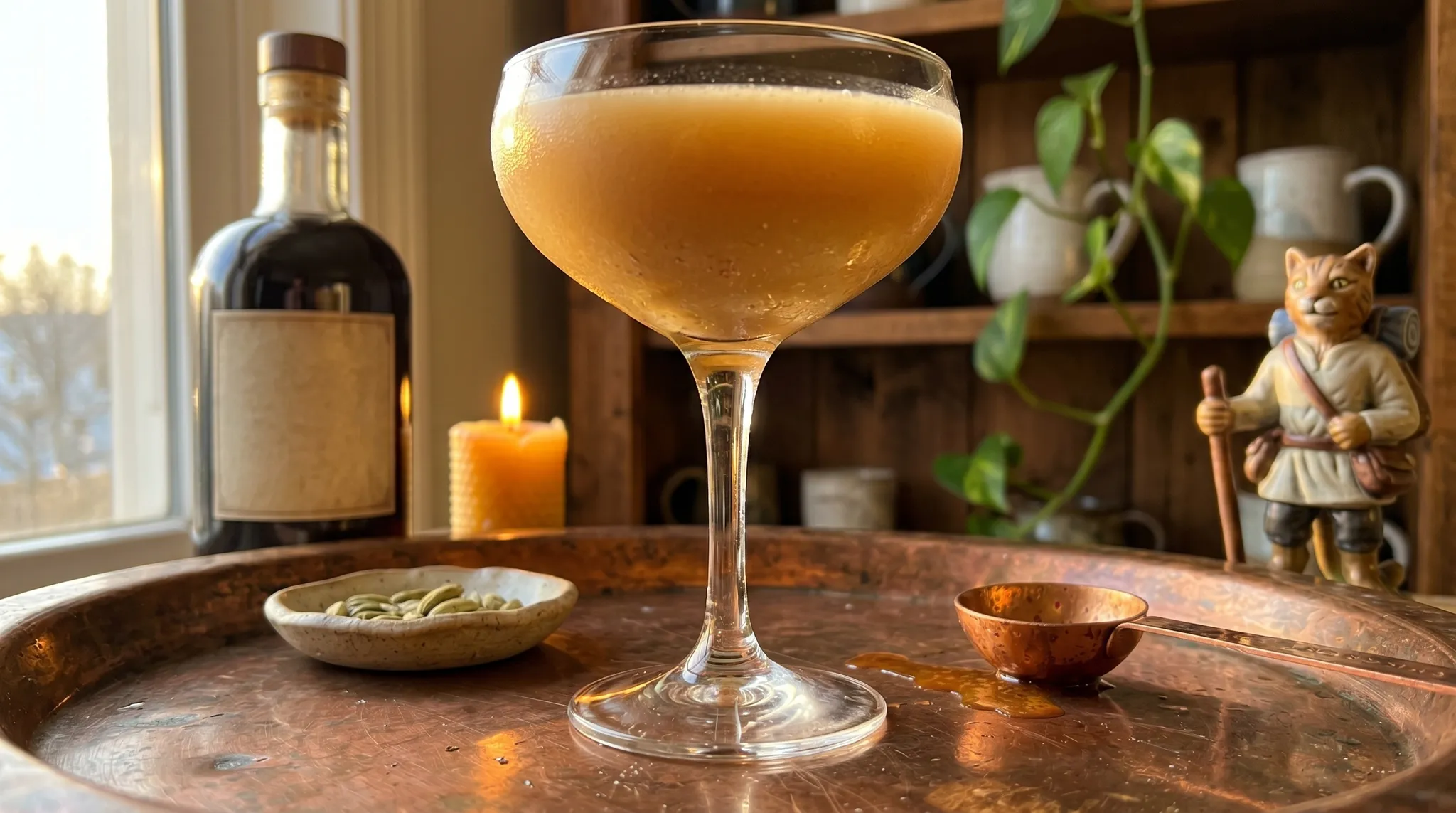
Not my brain. My brain had concerns. My brain had follow-up questions. My body overruled all of it. The warmth started at the back of my throat and spread downward through my chest like someone had lit a very small, very gentle fire behind my sternum. The sweetness came first — honey, deep and round — and then the spice arrived like a second wave: cardamom, unmistakable, then something warmer and more complex, a cinnamon-adjacent heat that wasn’t sharp but blooming. It opened up as it went down. Every swallow revealed a new layer, and by the time I’d processed the first sip, the warmth had reached my fingertips.
I set the cup down and looked at it. The liquid clung to the sides the way good syrup does — legs, a sommelier would call them, but that’s a wine word and this was not wine. This was something older than wine. The color in the firelight was absurd. Honey-amber shot through with gold, refracting and catching, and I sat there watching it settle and I understood, for the first time, why people risk the guards. Why they buy it out of wagons on cold plains from traveling merchants who smile and say it is perhaps not for everyone. Because it isn’t for everyone. It’s for the people who take one sip and feel their whole skeleton relax.
“Ri’saad wasn’t kidding,” Priya said. She was holding her cup with both hands, the way you hold something warm when you didn’t realize how cold you were.
“No,” I said. “He was not.”
We sat there by the fire for a long time. The bard was singing something about Ragnar the Red, which is apparently the “Don’t Stop Believin’” of Skyrim — everyone knows the words, nobody remembers learning them. Hulda refilled our mead once without being asked, which I took as either good service or a commentary on our pace. The fire crackled and popped and I watched the sparks drift up toward the chimney and I thought about the lamp on Ri’saad’s wagon, swinging in the wind, and the color of the skooma in the firelight, and how sometimes the best things you taste are the things someone told you not to tell anyone about.
I bought three more bottles before we left. Priya bought five.
Here’s where it gets technical.
Recreating skooma at home was a three-week project that took over my kitchen so completely that Mark started eating dinner in the living room. Not out of protest — he was supportive, in his way — but because every horizontal surface in the kitchen was occupied by some combination of chai tea, coconut cream, cardamom pods, and amber-colored liquids in mason jars labeled with painter’s tape and Sharpie. It looked like an apothecary exploded. He said it smelled “like a very nice candle store that had made some bad decisions.” He wasn’t wrong.
The first problem was the base spirit. Skooma’s warmth is its defining characteristic — not alcoholic heat, but a spreading, full-body warmth that starts in your throat and radiates outward. I needed a spirit that brought its own warmth to the table. Bourbon was my first instinct, but it was too assertive, too American, too much oak and char. Aged rum was closer — the molasses sweetness mapped onto moon sugar beautifully — but standard aged rum didn’t have enough spice. It was sweet and smooth and pleasant and boring. I needed it to be interesting.
Spiced rum was the answer, but I’m going to be specific, because “spiced rum” covers a range from “actually nuanced” to “someone poured vanilla extract into grain alcohol and called it Caribbean.” You want something with real spice infusion — Chairmen’s Reserve Spiced, or The Kraken if you want something darker and more assertive, or Sailor Jerry if you’re on a budget and don’t mind leaning a little sweeter. What you’re looking for is a rum where the cinnamon and vanilla and clove are part of the spirit’s character, not a costume it’s wearing. Taste it neat first. If it tastes like a candle, put it back.
The chai syrup was the breakthrough. I’m going to explain this in detail because it matters. Skooma’s complexity — that layered spice that unfolds as you drink — comes from the chai syrup, and the quality of that syrup is the difference between “nice spiced cocktail” and “I understand why the Khajiit won’t share this with just anyone.” Here’s what you do: Brew strong chai tea — real loose-leaf chai with black peppercorns, cardamom pods, cloves, cinnamon bark, and fresh ginger, not a teabag, never a teabag — steep it for ten minutes until it’s dark and aggressive. Then combine it one-to-one with raw cane sugar in a saucepan, heat it gently until the sugar dissolves, and let it simmer on the lowest possible flame for another five minutes. What you end up with is a syrup that tastes like the intersection of a spice market and a holiday your grandmother used to host. It keeps in the fridge for two weeks. You will put it in everything. I’m sorry.
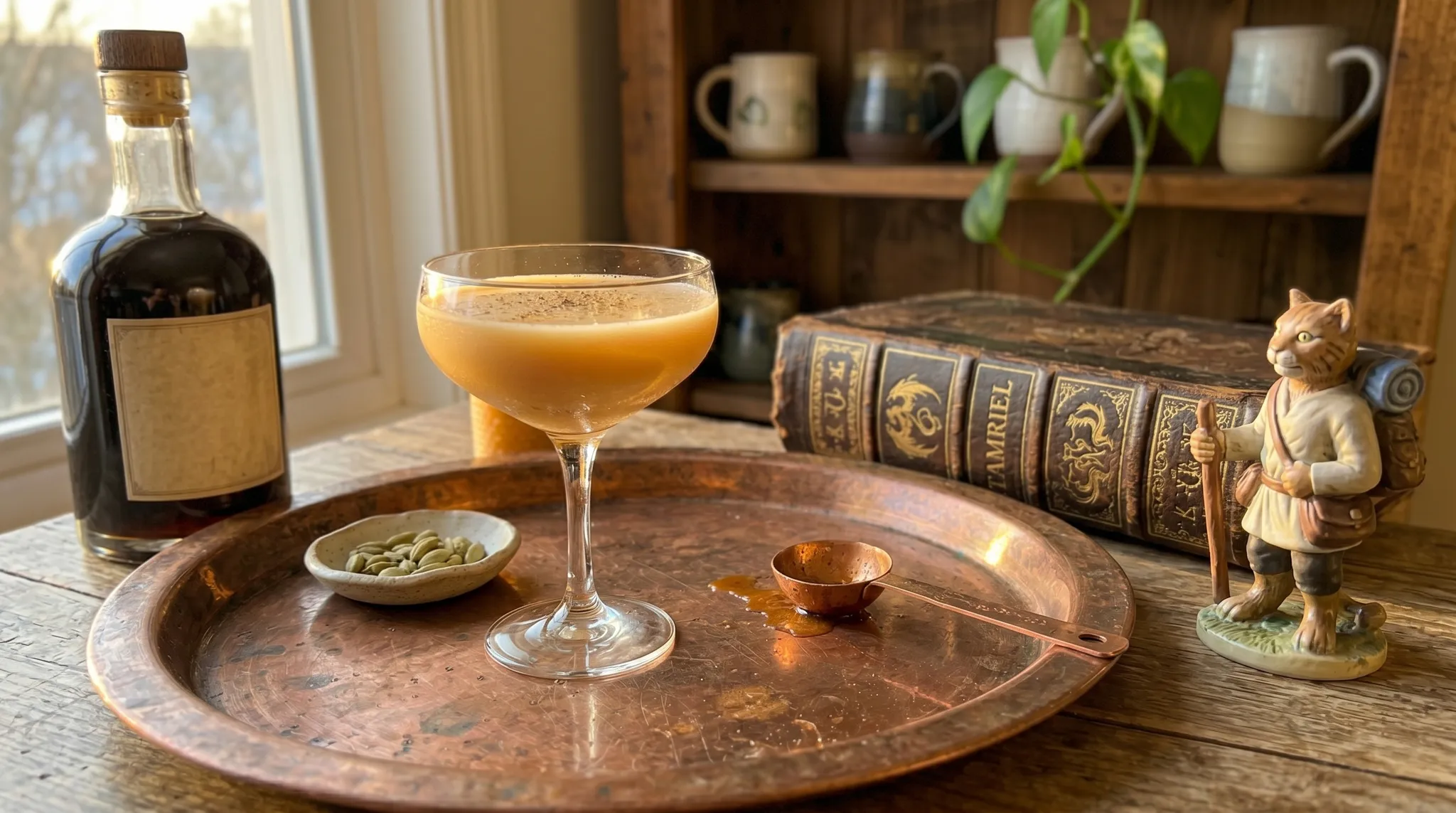
The coconut cream was a later addition and it changed everything. The original batches without it were good — flavorful, warm, complex — but they were missing the texture that makes skooma what it is. Skooma isn’t just a drink, it’s a mouthfeel. That thick, slow, almost velvety viscosity that makes it cling to the glass and coat your tongue. Coconut cream — real coconut cream from a can, the thick part, not coconut milk — gives you that body. It rounds out the spice and adds this subtle tropical sweetness that reads less “piña colada” and more “something from very far away.” The first time I shook a batch with coconut cream and strained it into a coupe and watched it settle — thick, gold, shimmering — I stood in my kitchen at one in the morning and said, out loud, to no one, “That’s it. That’s the one.” Mark, from the other room: “Can I have my counter back?” No. Not yet.
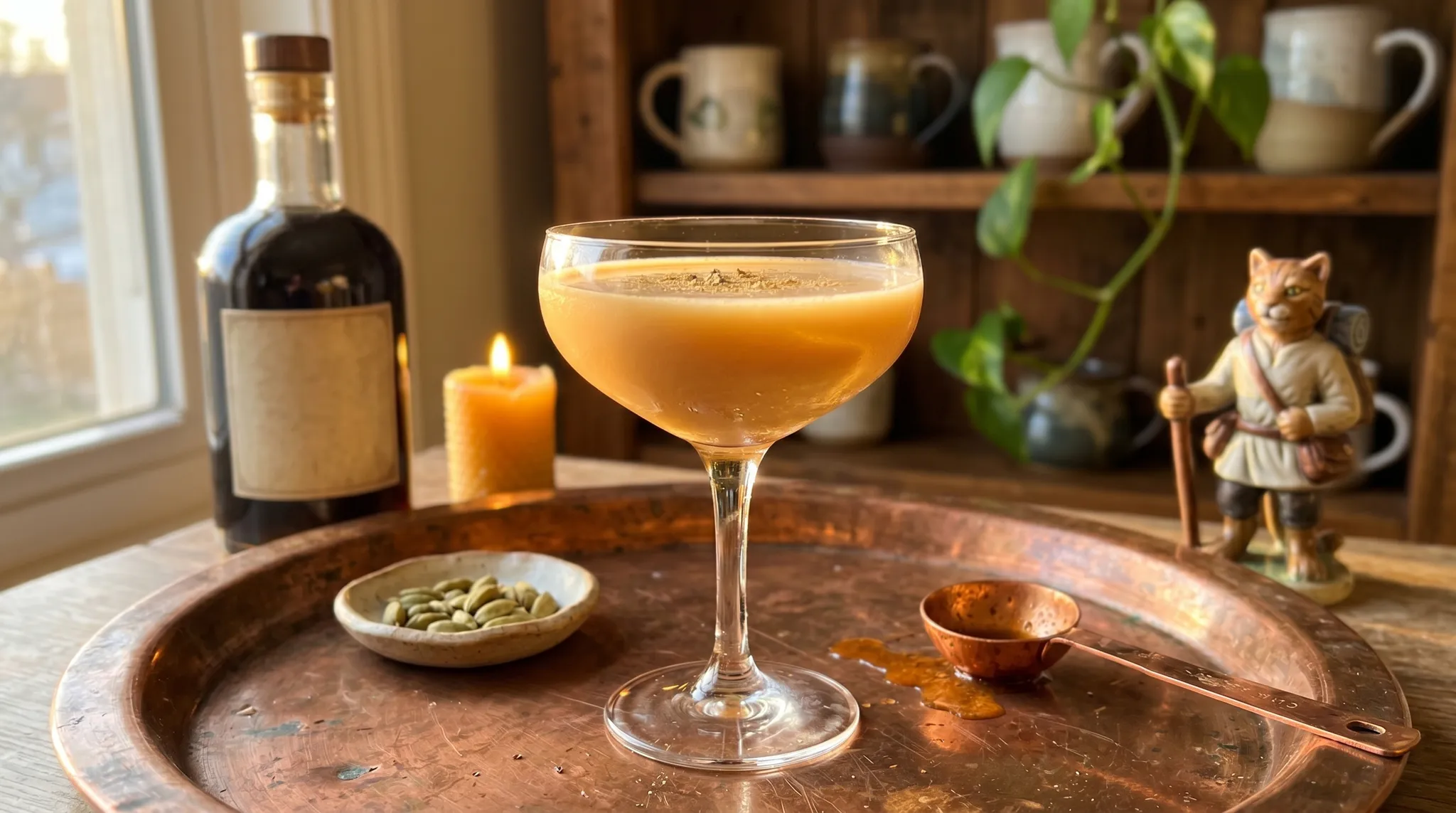
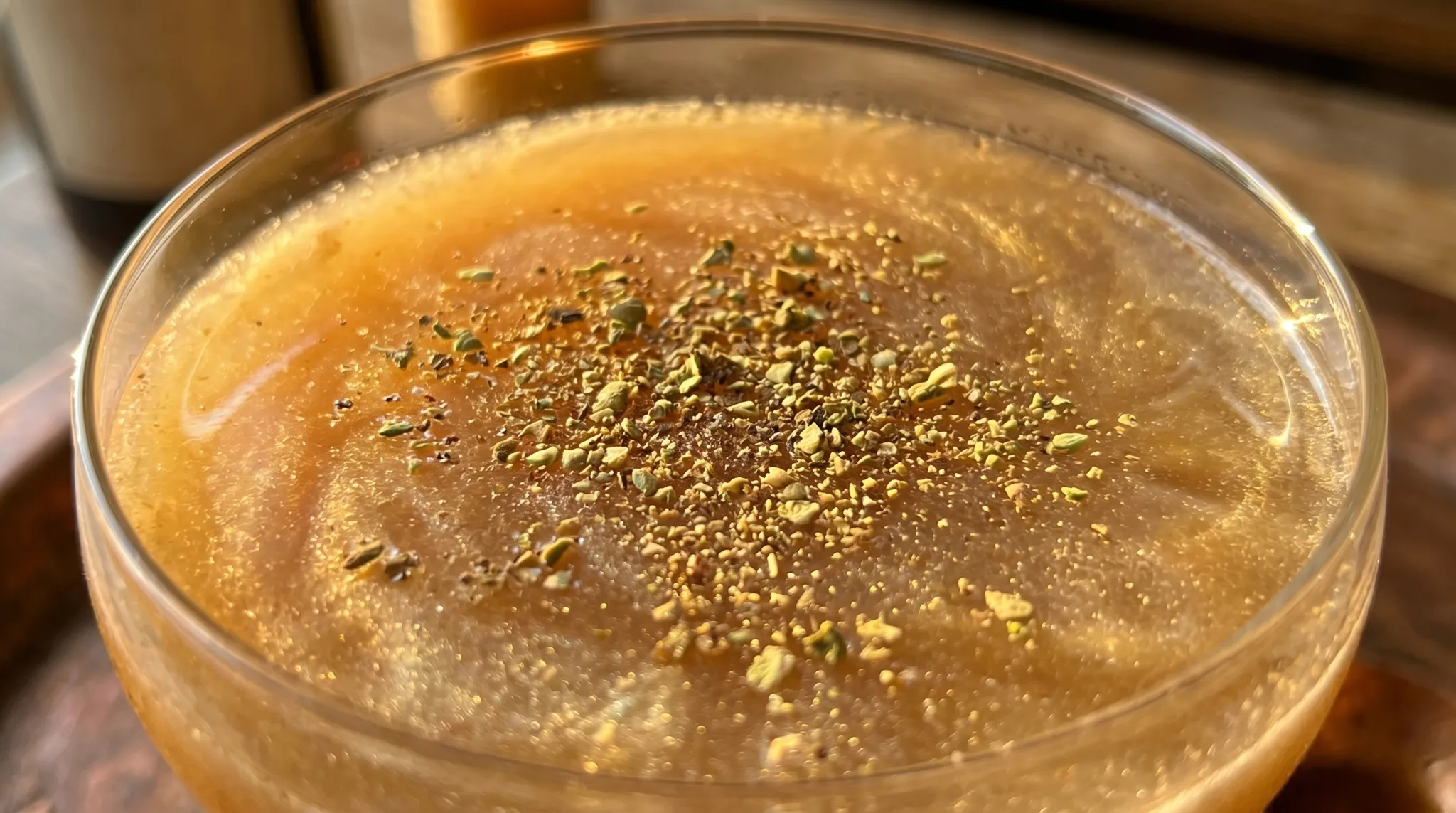
The cardamom dust on top is the finishing touch and it is non-negotiable. Fresh cardamom, ground in a mortar and pestle — not pre-ground, which tastes like cardamom’s ghost — dusted across the surface. It does two things: it gives you an aromatic hit before your first sip, that warm-sweet-green smell that primes your palate, and it makes the surface of the drink look like it’s been blessed by someone who knows what they’re doing. The edible gold shimmer is optional but I will say this: the moment you add it, the drink stops being a cocktail and becomes an artifact. It catches light. It shifts as you tilt the glass. It makes the whole thing look like liquid treasure, which is exactly what moon sugar is supposed to be.
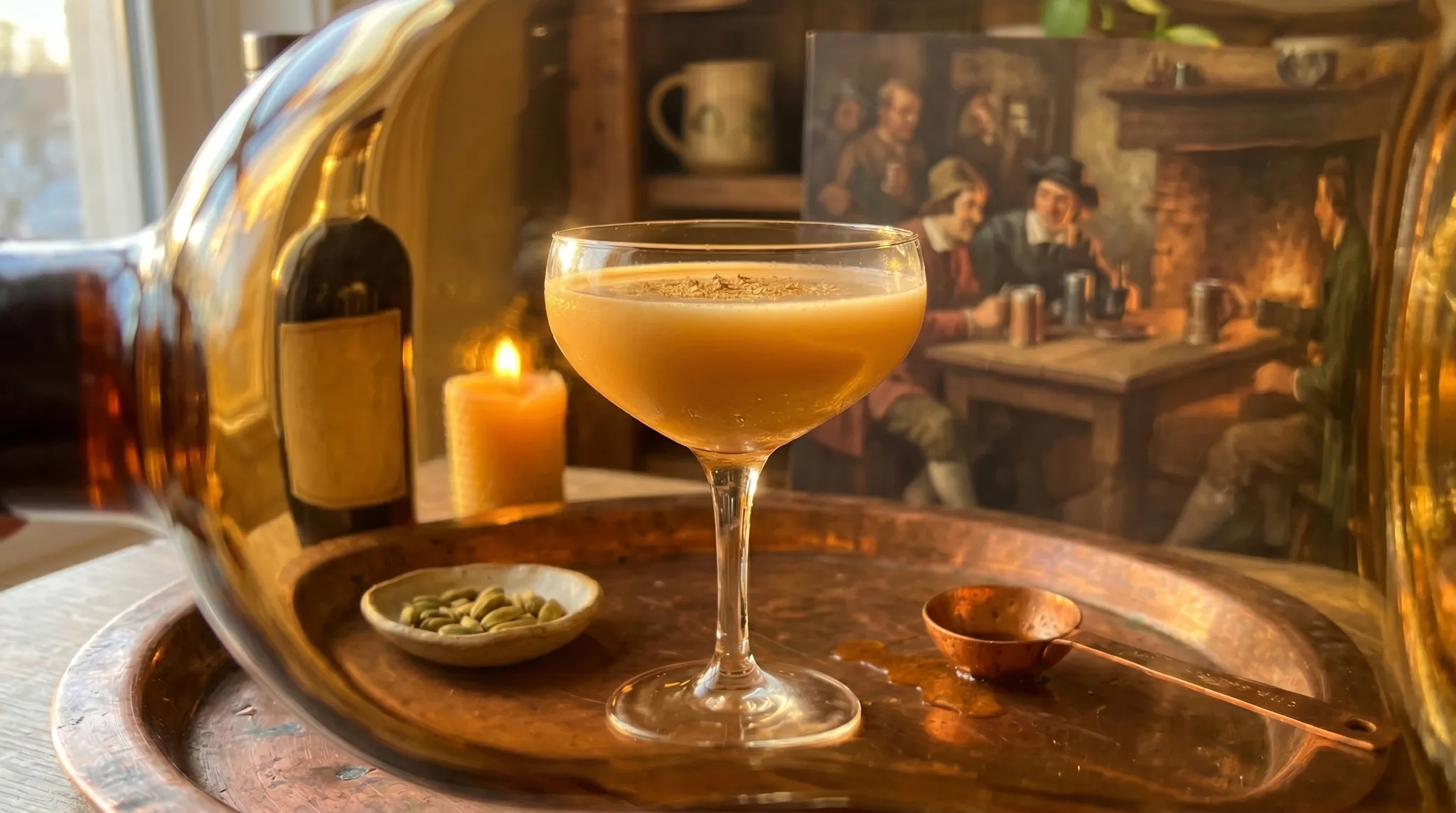
Make this for a cold night when you need something warmer than wine and stranger than hot chocolate. Make this for someone who understands that the best purchases happen in fields outside city walls from people the guards don’t trust. Make this for yourself after a long week, when you want to sit by a fire — real or imagined — and feel your skeleton slowly, gratefully, relax.
Don’t tell the guards. They’re unsympathetic.
The Khajiit's Delight (Skooma)
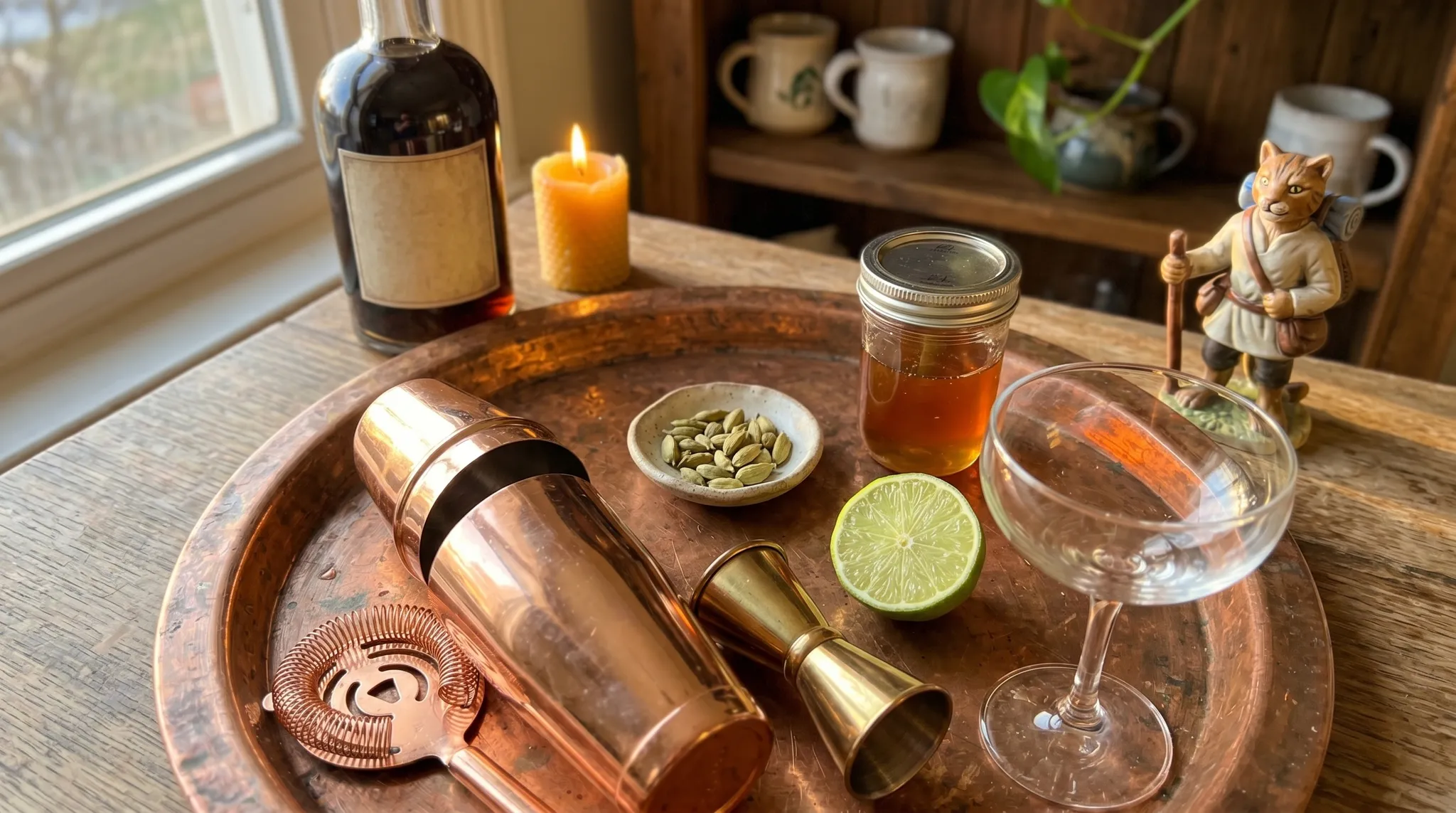
Ingredients
Instructions
- Brew a small amount of strong chai tea and let it cool. You'll need about 1 oz. If you're using the homemade chai syrup from the notes, you're already ahead of the caravan.
- Combine the spiced rum, vanilla liqueur, coconut cream, honey, and cooled chai tea in a shaker. Pause to appreciate the color. It's already beautiful and you haven't even done anything yet.
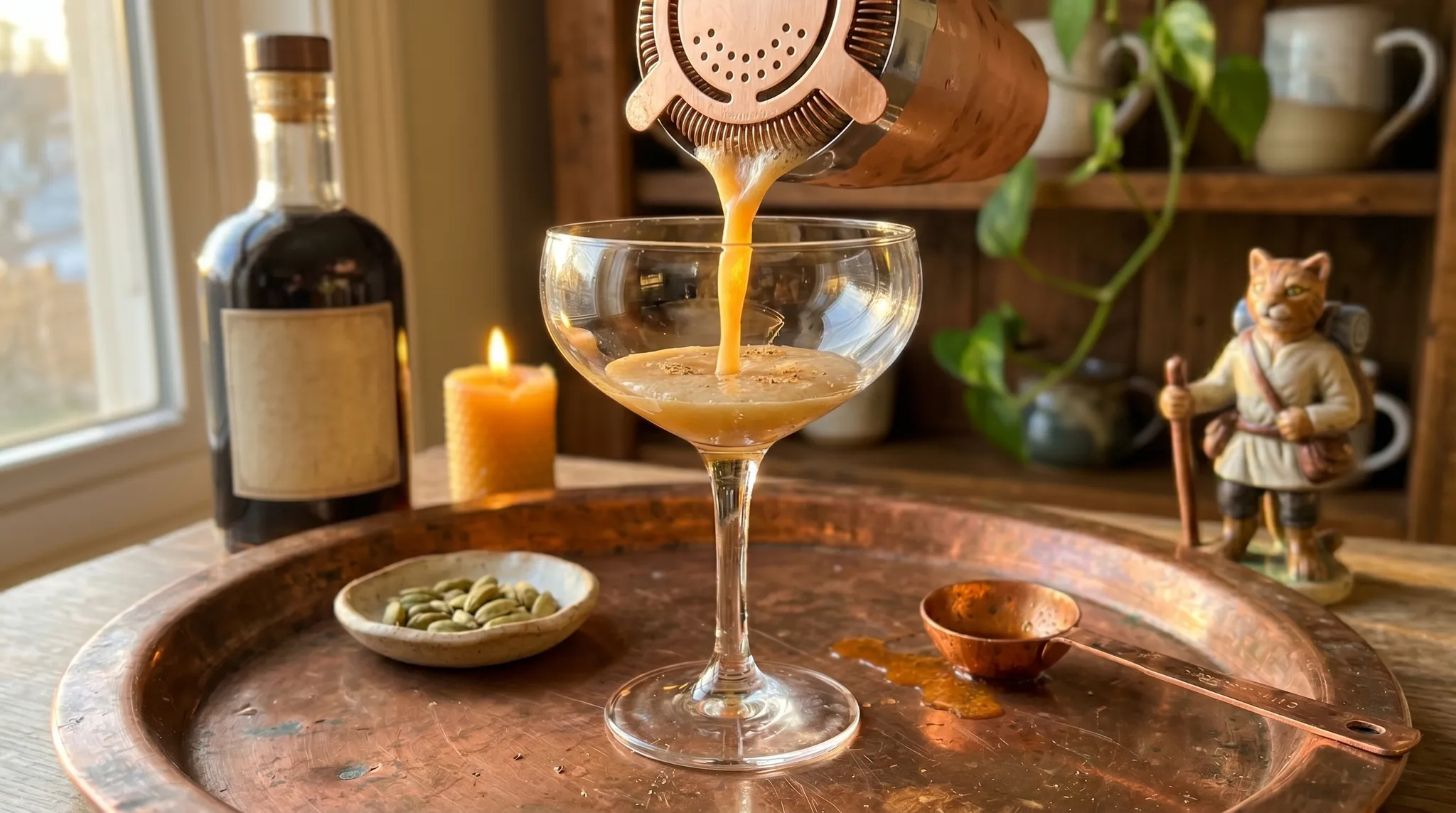
- Add ice and shake until the shaker feels cold enough to store in a Nord's basement. Fifteen seconds, minimum. You want the coconut cream fully integrated.
- Strain into a coupe glass or, for authenticity, a small ceramic bottle you bought from a traveling merchant and refuse to explain.
- Dust a pinch of freshly ground cardamom on top. Watch it settle on the surface like spice-scented snow.
- Add a small amount of edible gold shimmer, if using, and give it one gentle stir. Watch the light catch. Try not to become emotionally attached to a beverage.
- Drink while assuring nearby guards that you definitely found this in a chest and had no idea what it was.
Magnolia’s Notes
- On the rum: Spiced rum is the foundation and it matters more than you think. Chairmen’s Reserve Spiced is my first choice — the spice is baked into the spirit, not sprayed on top. The Kraken works if you want something darker and more brooding. Sailor Jerry is fine on a budget. Captain Morgan is not fine. I said what I said. Taste it neat before you build the drink — if the spice tastes like an afterthought, the whole cocktail will too.
- On the chai syrup: Make it yourself. I know, I know. But the pre-made stuff is always too sweet and never complex enough. Brew real loose-leaf chai with whole spices — black peppercorns, green cardamom pods, whole cloves, a cinnamon stick, and a thumb of fresh ginger. Steep it dark and mean. Combine one-to-one with raw cane sugar over low heat. Five minutes at a bare simmer. Strain. Refrigerate. It lasts two weeks and you will find yourself putting it in coffee, oatmeal, and things that have no business containing chai syrup. I regret nothing.
- On the coconut cream: Use the thick cream from the top of a can of full-fat coconut milk — Aroy-D or Thai Kitchen are both reliable. Do not use coconut milk from a carton. Do not use coconut water. You need the fat. The fat is what gives this drink its body, that slow, clinging viscosity that makes it feel like more than a cocktail. Shake hard to emulsify — if it separates in the glass, you didn’t shake long enough.
- On the cardamom: Fresh. Ground. In a mortar and pestle, ideally, or a spice grinder if you must. Pre-ground cardamom from the spice aisle is a shadow of itself — it tastes like the memory of cardamom rather than the actual experience. You want that bright, warm, almost eucalyptus-green aroma when you crack the pods. It’s the first thing you smell before your first sip, and it tells your brain that something special is about to happen.
- On the shimmer: Edible luster dust in gold. You can find it at baking supply stores or online — just make sure it’s actually food-grade. A tiny amount goes a long way. Stir it in gently — you want it suspended, not settled. When it catches the light, the drink looks like liquid moon sugar, and that is exactly the point.
Did you make this? Show me. I want to see your contraband. Tag me, but maybe do it from a burner account — the guards are watching.